Architecture of Noise

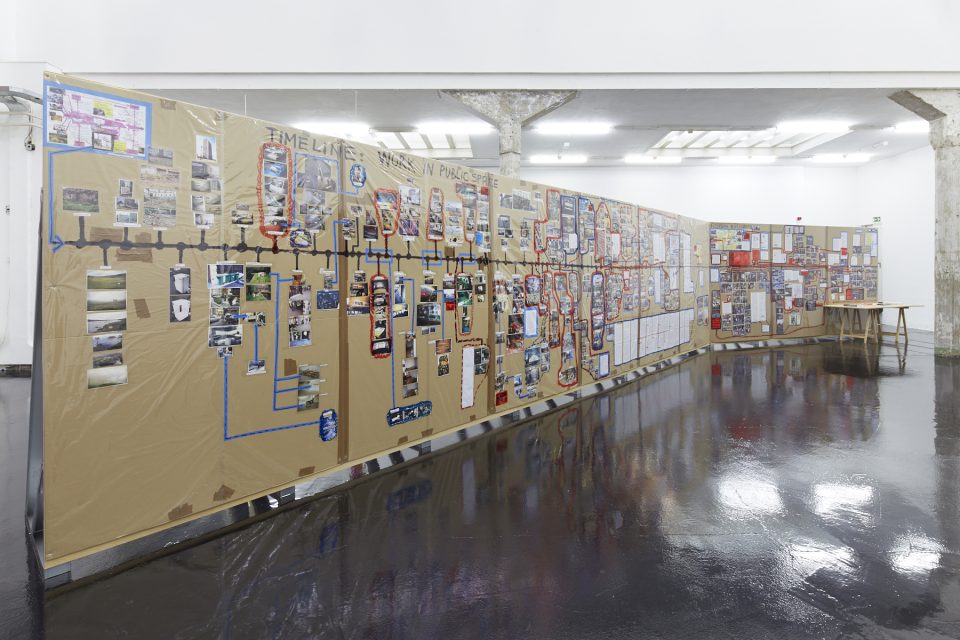
In 2021, the participants of Architectures of Noise were working individually and collectively in art-based research processes. They involve reading sessions, walks, talks, accompanied by architectural and sculptural interventions, performances, workshops, and experiments, especially in the sense of experiri (experience), reason, and resonance in the public and private domains.

During the summer session at W139, artifacts of diverse but interconnected aspects of these genealogies of experience and epistemic architectures are shared with the public. Surveying how these specialized and sometimes also ambiguous instruments (i.e., language, laws) materialities and political concepts crystallized from the past influence future progress.

Architectures of Noise is curated by Evelina Rajca and made possible in collaboration with:

Clara Palli
Pierfrancesco Gava
Arefeh Riahi and Sher Doruff
Ellington Mingus
Susanna Schoenberg
Thomas Hawranke
Lillian Rosa, Gudrun Schoppe in collaboration with Samer Makarem
Evelina Rajca in correspondence with Felipe González and Konrad Bohley
and guests­

More information:
Handout (pdf)
Information about the works (pdf)


POLAR ROOM | WhatDoYouFightFor?

Lillian Rosa, Gudrun Schoppe in collaboration with Samer Makarem

“What empowers people to be the heartbeat of a civil society that drives the change we need in the world?”

This is the key theme of the long term interdisciplinary art work WhatDoYouFightFor? by Lillian Rosa and Gudrun Schoppe. Following up the short documentary (R)EVOLUTION and a series of events in Berlin, they used their collective (digital) Artist in Residency in Amsterdam as the starting point for developing a series of film portraits with citizens from around the world who engage in action around democracy, sustainability and civil rights.

In cooperation with Lebanese activist Samer Makarem and his network engaged in leading a civil alliance for reconstructing and building a civil state without corruption but with civil rights and democracy they are sharing artifacts of the ongoing collective research approach at W139’s Polar Room in the context of their joint (digital) residency.

Photography by Jeroen de Smalen.
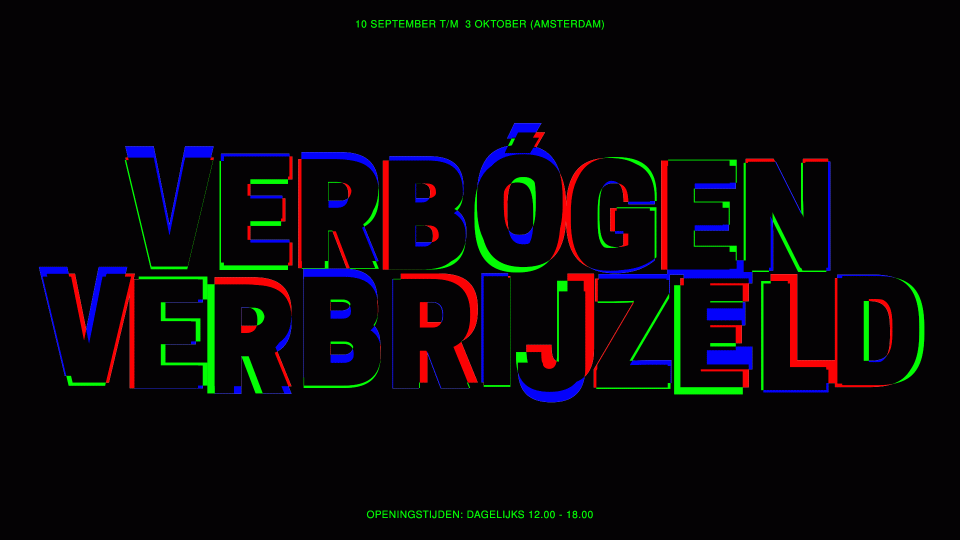
Verbógen Verbrijzeld

Verbógen Verbrijzeld (Shattered Scattered) examines how white light can be splintered and bended – how you can become one with matter.

In the solo exhibition by Philip Vermeulen you will get to know his newly developed ‘hyper-sculptures’, which shatter and mechanically scatter white light into thousands pieces of color. The roar of colors, the pinching sound and the wind of the fast spinning machines give you an intense physical experience. Within a meta-composition the works are in constant dialogue with each other, submerging you in the dynamics between human and machine.

Philip Vermeulen is a The Hague-based artist who makes large-scale installations. His installations are  part of his ongoing research in altering psychological states through the manipulation of primary phenomena of light, sound, and movement. Vermeulen creates what he calls ‘hypersculptures’: kinetic sculptures which move at such high speeds they change our perception of the physical properties of these materials.

His work has been shown at locations from museums (Stedelijk Museum Amsterdam, Stedelijk Museum Schiedam, Rijksmuseum Twenthe) to art spaces (W139, Arti et Amicitae), clubs (Berghain Berlin) media festivals (Novas Frequências Rio de Janeiro, Ars Electronica Linz, TodaysArt, CTM Berlin), and outdoors (Into the Great Wide Open, Vlieland). In 2020 Vermeulen’s installation More Moiré² has been nominated for The Volkskrant Visual Art Prize and was also one of the nominee’s for The Golden Calf (in Dutch: Gouden Kalf) in the category of Best Interactive 2020.

This exhibition is made possible in part by: Stroom Den Haag, Mondriaan Fonds, Gemeente Amsterdam, Kickstart Cultuur Fonds en PIP Den Haag.

Under Bat Hill

Under Bat Hill is a group exhibition that imagines the W139 as a glorious cavern in the middle of the city. Isolated from the outside world and its dwellers, this huge space is activated through a daily program of screenings and listening sessions.

At 19:35 on the 22nd of April, 2020, Pope Francis tweeted, [When we are in a state of sin we are like “human bats” who can move about only at night. We find it easier to live in darkness because the light reveals to us what we do not want to see. But then our eyes grow accustomed to darkness and we no longer recognize the light.] His tweet received hundreds of replies including one from @GiveBatsABreak who began, [On the contrary Holy Father, the darkness brings to the bat precisely that which it DOES want to face, not what it doesn’t. Bats are not under the cover of night committing crimes for which it should be ashamed, but providing invaluable services to our ecosystems and communities.] Through a series of further tweets, @GiveBatsABreak pushes beyond the pope’s casual anthropomorphic description, detailing how bats benefit both the environment and the economy.

Under Bat Hill presents a selection of works that too seek to move their subjects beyond casual remit. Subjects that exist in the world outside the cavern under bat hill.

Foto’s door Jeroen de Smalen.