The Nature of Remembering

Initiated by artist Lawil Karama in conversation with historian Megan Hoetger, The Nature of Remembering is a group exhibition featuring multimedia research projects that move between interrogation of normative memory politics and co-experimentation with environmental and more-than-human bodies.

The exhibition title carries in it two meanings: on the one hand, nature is evoked, drawing focus to actants, actors, and animacies beyond and beside the human, who witness, participate in, index, recollect, foretell, and haunt historical time. On the other hand, the idiomatic expression the nature of is taken up as a provocation, pushing against pervasive ideological and violently enforced notions of remembering and of commemorating.

Running through all projects is a commitment to practices of frictioning: engaging technologies against their colonial grain, and lingering in the affectively, ancestrally, archivally, and forensically intertwined conditions of lived experience and knowledge production. Collectively, the works ask: Who, or what, enframes and enlivens acts of remembering violence, which have been rendered invisible, unspeakable, and unthinkable?

The exhibition features work by Samuel Baidoo, Michèle Boulogne, Laura Fong Prosper and Tin Wilke, Lawil Karama, Aram Lee, and Komtouch Napattaloong with Bart Seng Wen Long and Kaisa Saarinen.

This exhibition is generously supported by Amsterdam Fund for the Arts, Mondriaan Fund, and Prince Claus Fund, with the support of the Amsterdam City Council.

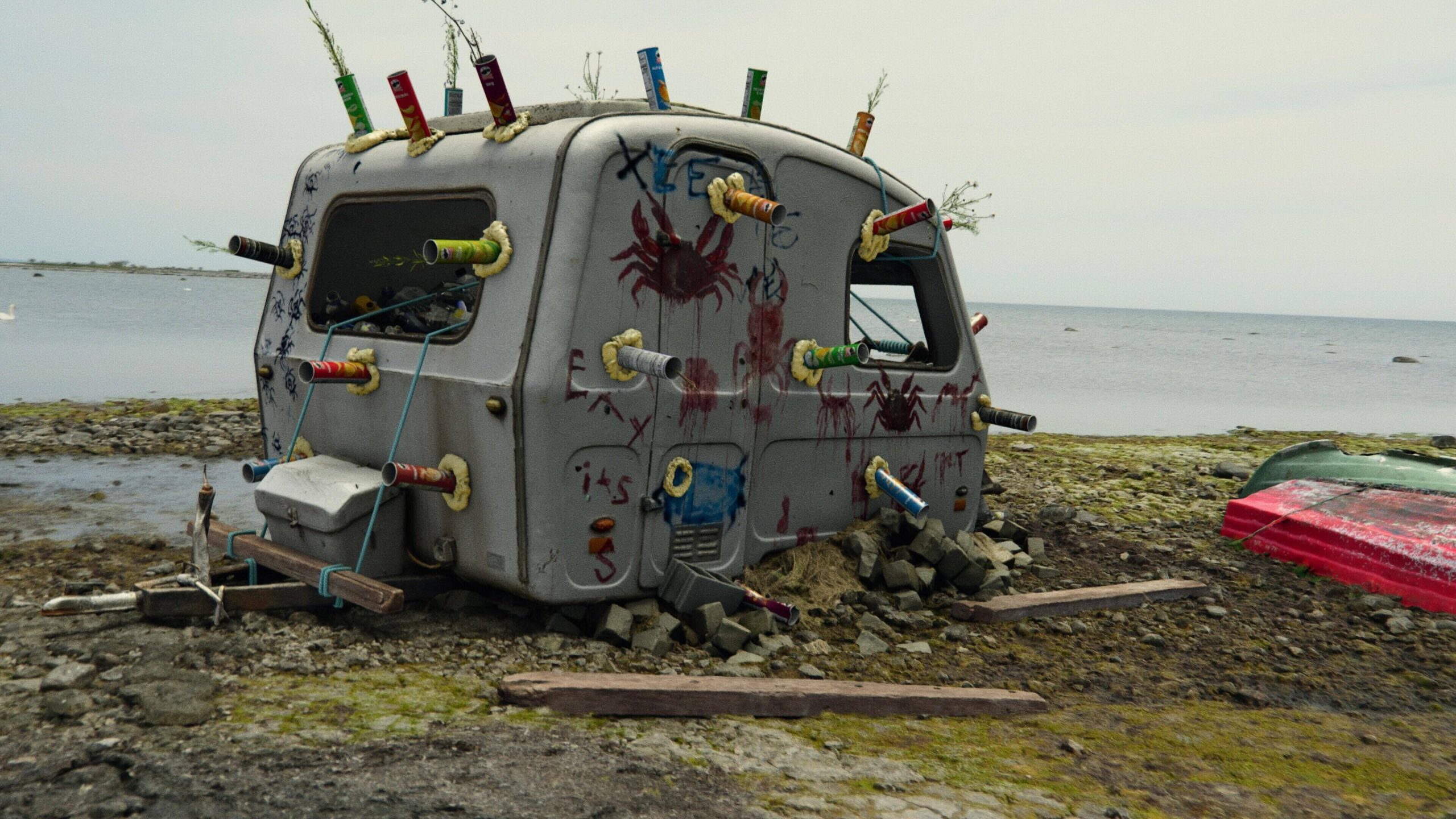
Image: Lawil Karama, Algorithm of Colour: Reflection Series – Sky 14:00 EAT, February 10, 1973 Mbale, Uganda (2026), KunstRAI X Rietveld Alumni 2026: paralelepípedo, photography by Lucia Del Valle Ramirez.

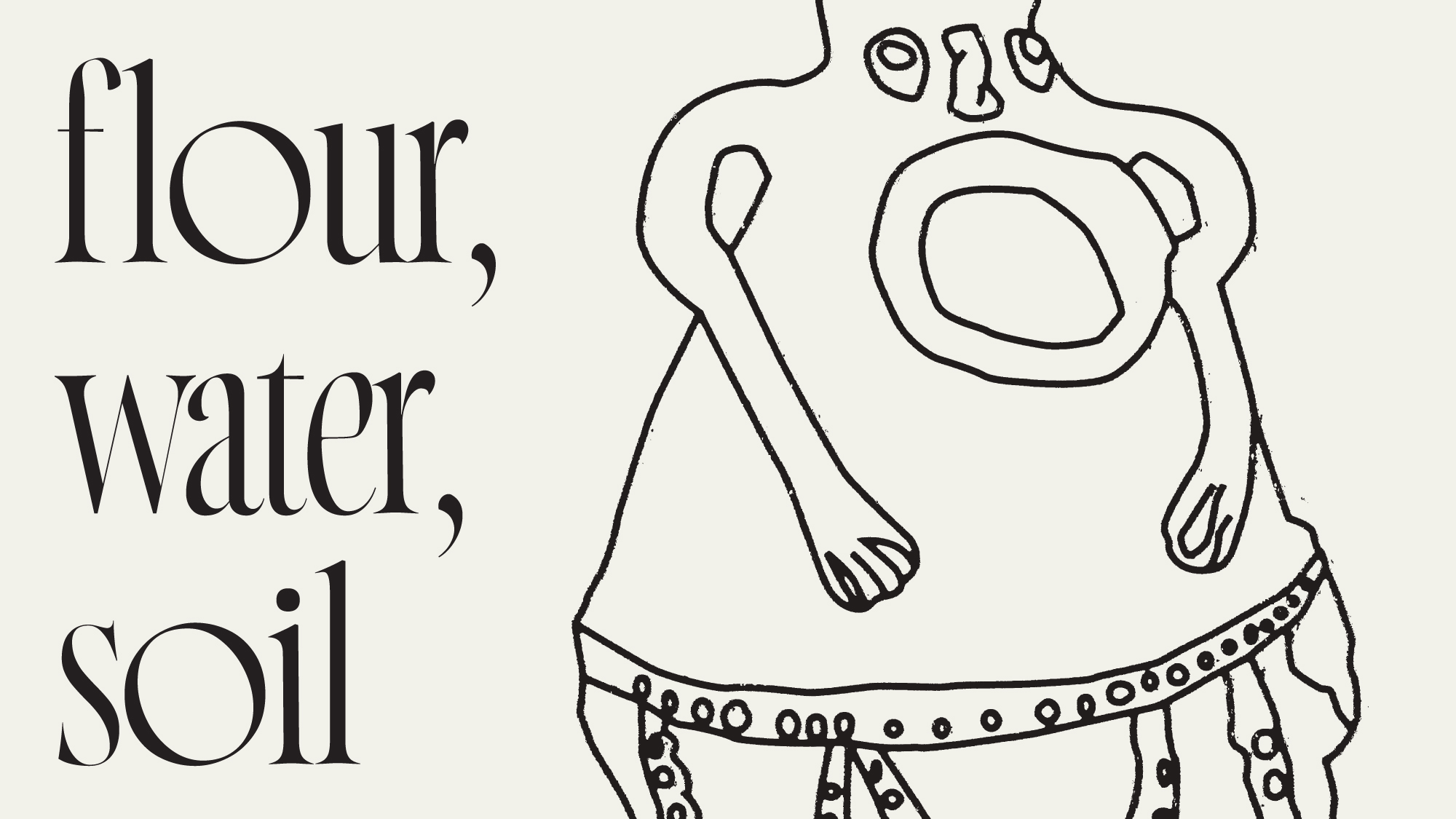
flour, water, soil

What is held in the ground is never singular. The soil holds what has been built and what has been undone. It carries gestures of care sedimented within violent histories. To approach the ground, here, is to approach a field of entanglement—a temporal convergence of soil, labour, and memory. Shaped by particular landscapes and micro-topographies, ingredients, gestures, and tastes become a living archive carried within and through practice. 

flour, water, soil, initiated by maria khatchadourian, takes shape through new and adapted site-specific works by Areej Ashhab, the duo Common Ground (Anna Celda and Saja Amro), Ola Hassanain, maria khatchadourian, Ai Ozaki and belit sağ. Together, the works in the exhibition attend to soil, seed, water, fermentation, and ruin as sites where care and violence are entangled—holding stories of repair, dispossession, and continuity.

The exhibition reflects on food, land, and agricultural practice as the infrastructures through which geographies of displacement, colonial rupture, and kinship are carried and contested—fragile geographies that resist erasure through dialect, embodied knowledge, and ancestral recipes.

Continue reading “flour, water, soil”

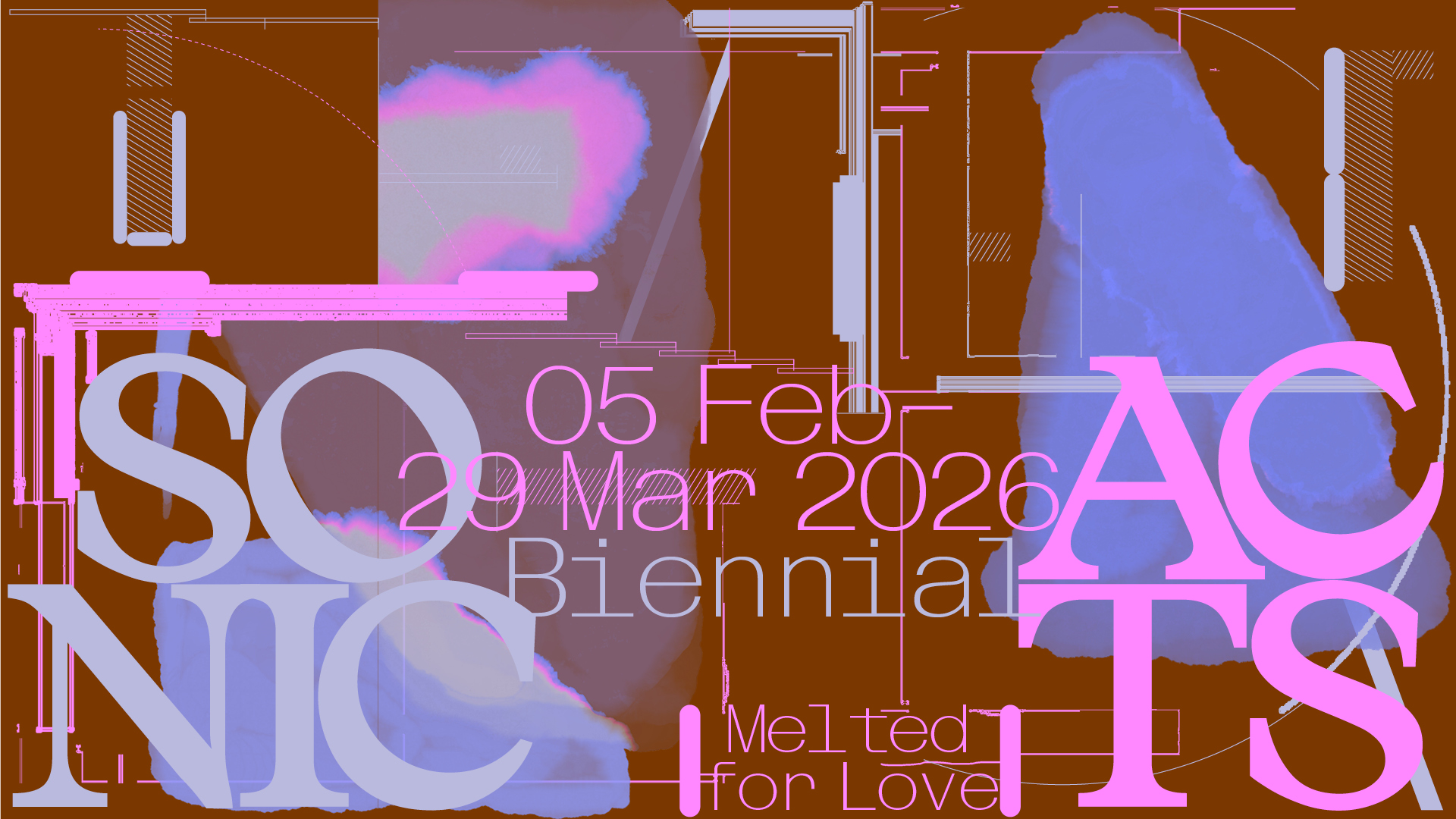
Sonic Acts Biennial 2026: Melted for Love

The exhibition Melted for Love, taking place across W139, Arti et Amicitiae, and Rozenstraat, as part of the Sonic Acts Biennial 2026, explores how the notion of ‘home’ is being renegotiated by climate crisis, colonial histories, and forced displacement. The exhibition brings together installations, films, sound works, and performances that reflect on how land, bodies, and ecosystems are shaped and altered by systems of exploitation. By listening to the echoes left behind, it highlights gestures of love and connection with land and community as forms of resistance and repair.

Continue reading “Sonic Acts Biennial 2026: Melted for Love”

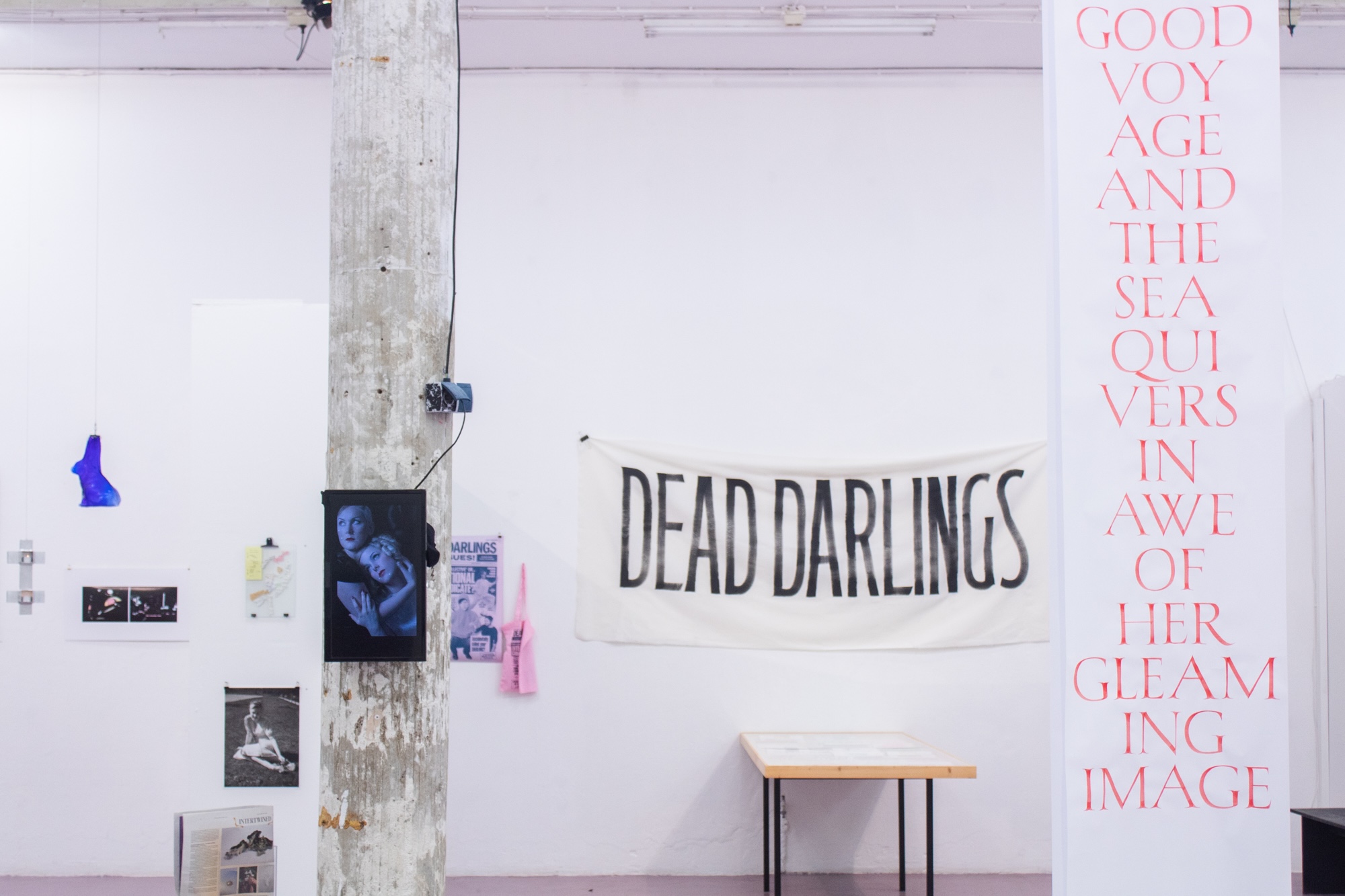
Dead Darlings XX — In It Together

Dead Darlings is thrilled to mark their 20th anniversary with a special exhibition and auction in collaboration with W139.

A two-week exhibition, including over eighty artworks, happenings, a plethora of archival materials and an extended auction event. We can’t wait to share with you what has been twenty years of fun, surprises, commitment, creativity and hard work.

The title for Dead Darling’s much-anticipated 20th anniversary event, In It Together, this December at W139, serves less as an explicit theme for our upcoming auction and more as a reminder of their origins — a return to form, a rallying cry to our community and the art lovers around us. Dead Darlings XX — In It Together is a signifier of a shared experience, signalling that sense of unity, solidarity, and mutual support that, as a collective, they have always relied on, are grateful for, and wish to highlight and celebrate in this very special 20th anniversary edition of Dead Darlings.

To celebrate this milestone, not only will there be a full-length auction day that will include a show and auction of up to 80 selected artworks, ending in an old-school W139 bash, but in the weeks leading up to it, there will be panel discussions, t-shirt silk-screening sessions, and a big archival show that will include 20 years worth of Dead Darlings anecdotes, films, images, and a fabulous display of all back catalogues and publications.

Continue reading “Dead Darlings XX — In It Together”

PPP

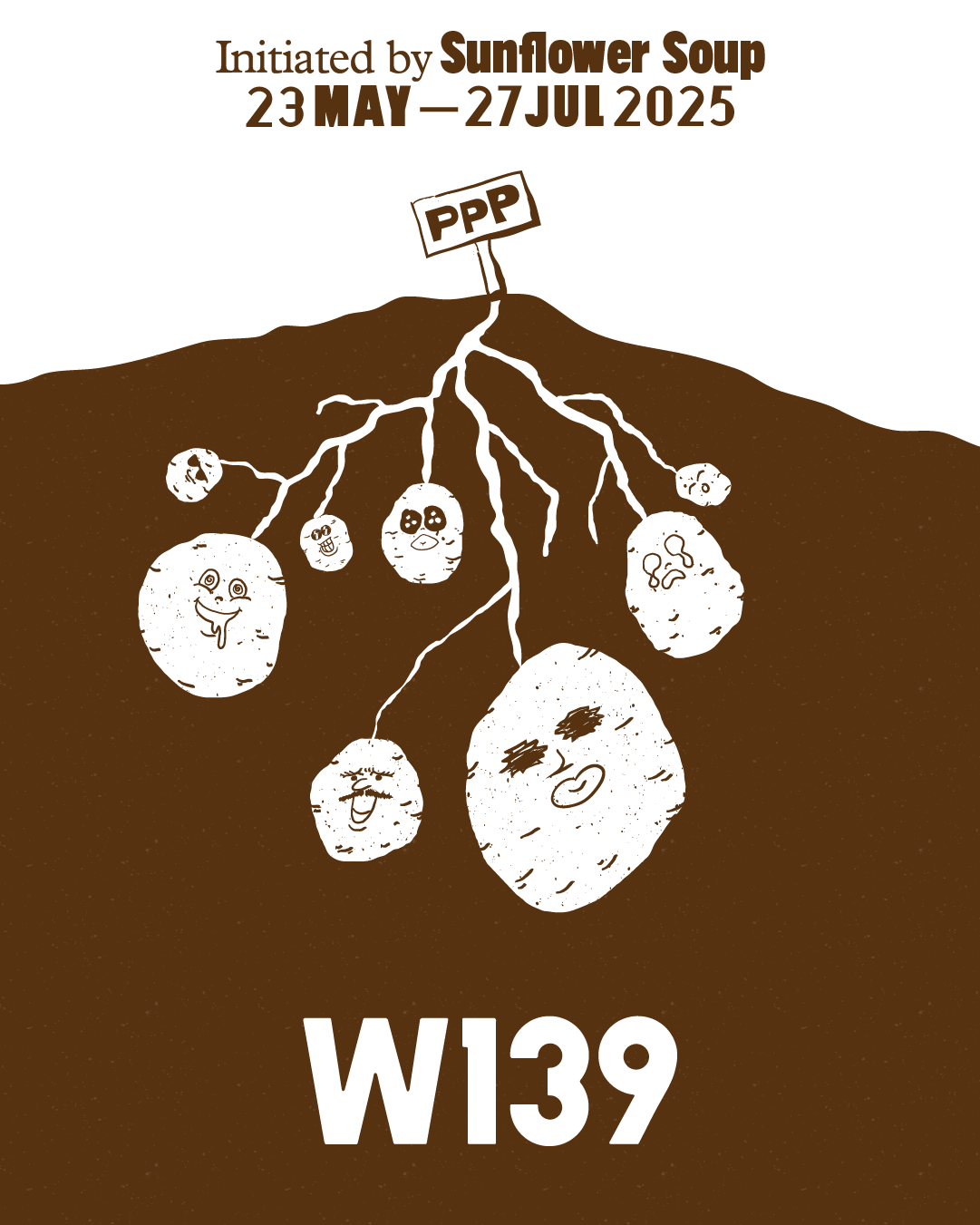
This spring, the Sunflower Soup collective brings PPP to life—a Political Party for Potatoes and other beings. PPP transforms W139 into a site of collective practice: an open workspace where you are welcome to make and share! 

Compared to conventional political parties, where a party programme is written first and policies follow, the PPP takes the opposite approach. It is founded on the belief that thinking and doing are strongly connected—and that knowledge about how we live together in society often emerges through making and collaborative experimentation.

While the potato plays a leading role within the party, the P’s are open to many interpretations: PPP could stand for Protorealist Pan-Political Project, Practical Party of Provocation, or Pansexual Potato Phantasy. This way the PPP functions as a pluriform platform for overlooked or obscured perspectives and aims to be a refuge for those who challenge the current political status quo.

As you enter the space, you first step into the PPP party office, designed and built by Doe-Het-Zelf Werkplaats. In the process of building this space, the collective simultaneously explored their own structure and collaborative working methods. The office serves as a space for gatherings and assemblies where the PPP’s party platform can be collectively shaped. In the back space, a Panic Factory by bende van de glittervingers emerges. Here, seeds of resistance, planted long ago in hidden corners, begin to sprout and take over. The Panic Factory quietly screams no! to the relentless drive for more, bigger, faster, better, greedier, as it transforms into a breeding ground for resistance during the period that the PPP occupies its premises. On the walls there are murals painted by Sunflower Soup and students depicting scenes of Pan Potato Politics.

Through a comprehensive workshop programme, the PPP will gradually expand over the course of two months. A multitude of collectives, makers, and visitors will collaboratively explore the politics of the potato and contribute to the PPP. As well as being playful and speculative, PPP will become a real physical place of political imagination and connection, proposing alternatives to the ways contemporary politics are shaped. More information on the workshop programme on our website soon!

Take part in a P(r)otato Propaganda Production workshop with Sunflower Soup, practice mobile protest printmaking with Kasih Graphic, perform a potato sowing ritual with 4Siblings, engage in a Spud-itorial debate with Jody Aikman, contribute to the PPPotato Paper in the editorial room of PotatoPress with mul-thee-fuhngk-shuh-nl, participate in a workshop on feminist printing and poetry with Periphery Center, explore the politics of perceiving with Rosalie Bak and Margherita Soldati, or join a slow conversation about sustainable art practices with Urgent Ecologies.

Learn more about the participating artists and exhibition in the handout of a Political Party for Potatoes and other beings.

Sunflower Soup was born out of a shared activist engagement and a need to explore what art can mean beyond the confines of the individual. The collective is driven by a number of questions: Can a shared way of working contribute to a less detached experience of art? How do people relate to each other and to the more- than- human world? How do we reconcile the importance of activism with a poetic visual language that allows for humour, paradox and ambiguity.

Doe-Het-Zelf Werkplaats is a free-to-use, collectively-run (squatted) workshop space and community garden in Rotterdam operated by volunteers. Visitors come to fix their bikes with tools and spare parts that have been donated while neighbors can freely harvest herbs from the garden. Centered around learning together, reciprocal generosity, and anti-judgement, the space creates a welcoming environment where folks can safely relate to each other on the border of what they know and what they are trying to figure out. DHZ consists of Deniz Gülyurt, M.B. McGregor, Christian Lesmes, Florian Henschel, Sapozhnikov Mikhail, Linda Zeb Hang, Tomi Hilsee and Saina Salarian.

bende van de glittervingers unleashes playful and absurdist scenes somewhere between art, activism and ecology. Where capitalist systems increasingly force people into individualism, glittervingers is committed to compassionate connection, with joy and fighting spirit. Building lasting relationships with the beings we share this planet with, creating and spreading stories that stick like glitters⋆ and make everyone shine.

PPP is supported by Fonds voor Cultuurparticipatie – Deelregeling Open Call: Cultuur voor Klimaat.

Visual identity by June Jungeun Yang.

Photos by Pieter Kers

Colophon 

Initiated by Sunflower Soup with Doe-Het-Zelf Werkplaats, bende van de glittervingers, Kasih Graphic, 4Siblings, Jody Aikman, mul-thee-fuhngkshuh- nl, Periphery Center, Rosalie Bak and Margherita Soldati, Urgent Ecologies, and more.

This exhibition has been developed by the artistic team of W139, with Tomas Adolfs leading the process, together with Maya Asad, André Avelãs, Dana Claasen, Levi van Gelder, Dil Ghale, Geer van der Klugt, Monica Liu, Macarena Magaña, Margarita Osipian, Claudio Ritfeld, and Annette Wolfsberger.

Visual identity by June Jungeun Yang

W139 is structurally supported by the Amsterdam Fund for the Arts and Mondriaan Fund. PPP is additionally supported by the Cultural Participation Fund.

A special thank you to Gerrit Rietveld Academie, the students of BEAR and SAWA Collective.

Temper Tantrum Bonehouse (Chilling Incisions Calling Things That Have No Name)

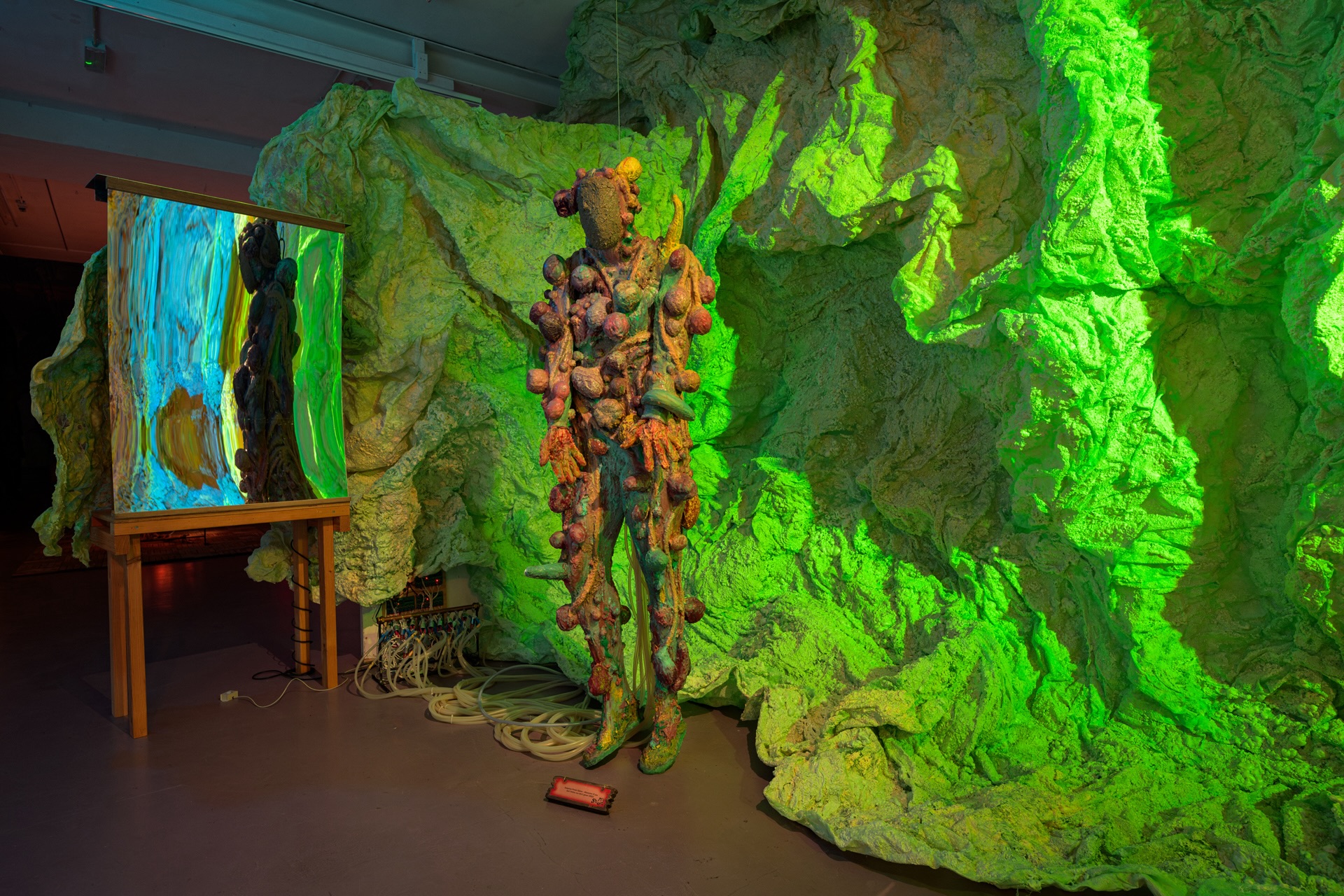
W139 opens its mouth and swallows you whole in Temper Tantrum Bonehouse (Chilling Incisions Calling Things That Have No Name), an exhibition initiated by Mette Sterre. Featuring works by Lolly Adams, Özgür Atlagan, Monster Chetwynd, Diane Mahín, Aimée Philips & Nina Läuger, and Mette Sterre, this immersive group show explores the limitless potential of the body—turning W139 into a possessed, grotesque, more-than-human organism.

The exhibition features new and existing works that similarly distort the body beyond limitations and familiarity—creating chimeric apparitions that defy categorization and offer counter-narratives against oppressive systems. What unfolds is not a descent into horror, but a reckoning with the politics of fear—woven through the systems that marked specific bodies as monstrous. Fear is not avoided, but disassembled, recoded, reimagined—jammed into new categories.

Temper Tantrum Bonehouse is a place where ghosts linger and monsters thrive. The exhibition pulses and panics, dares and disorients, asking us to renegotiate our relationships to power, to the system, and to our own corporeality.


Learn more about the participating artists and exhibition in the handout of Temper Tantrum Bonehouse (Chilling Incisions Calling Things That Have No Name).

Photos by Pieter Kers

This exhibition is supported by Amsterdam Fund for the Arts, Mondriaan Fund, het Cultuurfonds and Fonds 21.

Initiated by Mette Sterre.

At W139, we work collectively and intersectionally on exhibitions — guided and led by the initiating artists that we invite. This exhibition has been developed by the artistic team, with Claudio Ritfeld leading the process, together with Tomas Adolfs, Maya Asad, André Avelãs, Dana Claasen, Levi van Gelder, Dil Ghale, Geer van der Klugt, Monica Liu, Margarita Osipian, and Annette Wolfsberger.

Visual identity: Javier Rodriguez Fernandez

Sound design: BJ Nilsen

Technical support: Jan van Witteveen, Jan Inti van Delft

Partners: Amsterdam Dance Event, Mezrab, House of Løstbois.

A special thank you to Ilvy Adams, Sander Alblas, Renske Buissant des Armorie, Peter Cripps Clark, Lucia Fernandez Santoro, Anne Huttinga, Geertje Jacobs, Koos Jaspers, Liesbeth Klaver, Matthijs Koerts, Stephan Kuderna, Agata Leszczyńska, Wouter Lucifer, Miles Luxembourg, Lotte Nijhof, Yolane Rais, Kees Reedijk, Octave Rimbert-Rivière, Kirti Soekaloe, EKCW, Rijksakademie van beeldende kunsten, Kwintus Art, Pauwhof Fund, and Sadie Coles.

Re-arrangement of Priorities

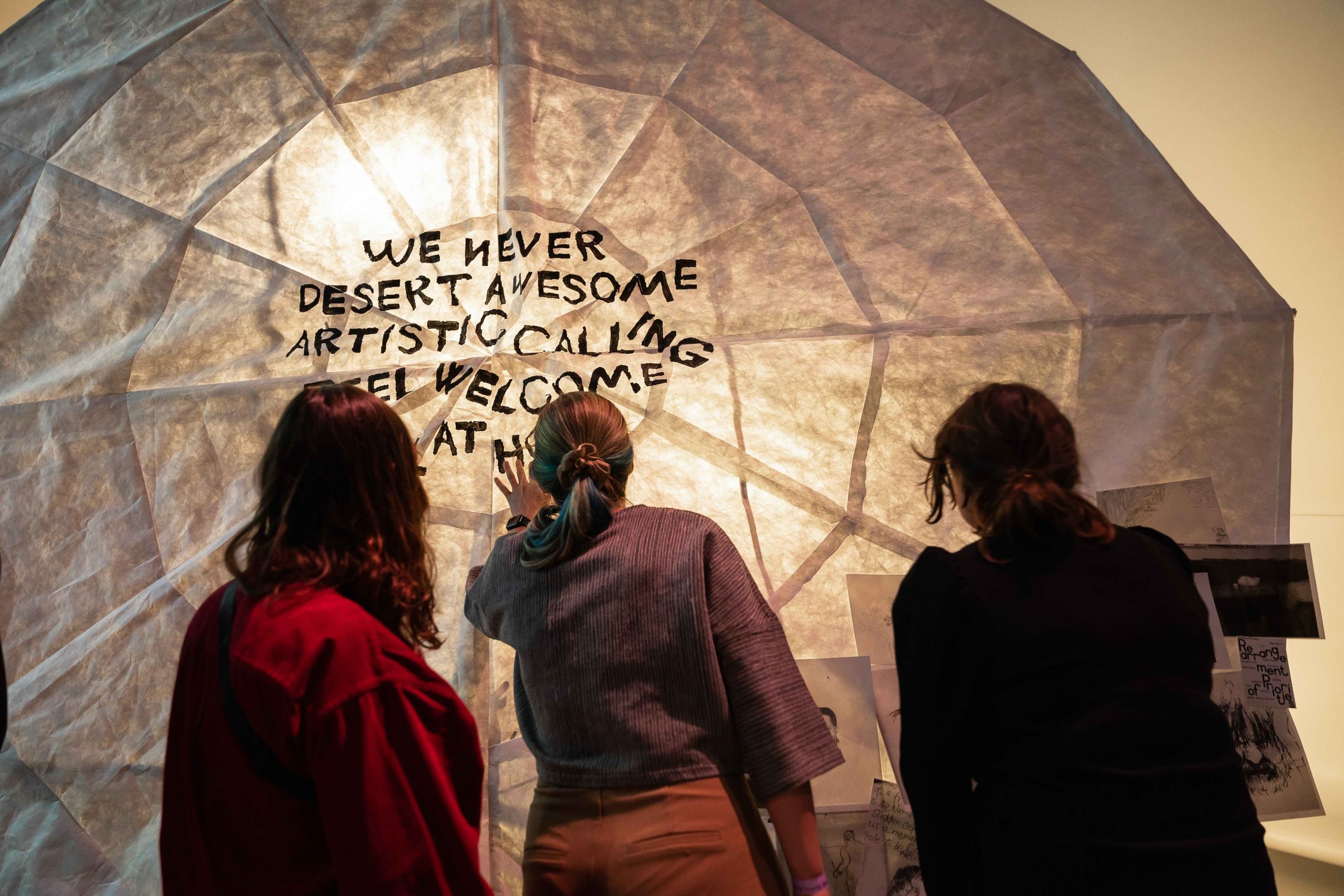
With 2025 marking the 20th anniversary of the collective, Rainbow Soulclub is returning to W139, where they first exhibited in 2007, to celebrate and situate this moment in time. This exhibition brings together works that have been created over years of collaboration, while simultaneously making visible that which forms between the making of work, together, over so long: a family that started as strangers.

Rainbow Soulclub is an art and solidarity collective founded in 2005 by visual artists Saskia Janssen and George Korsmit. Composed of makers and thinkers coming from different social, economic, and cultural backgrounds, they meet regularly at the collective studio in the drop-in centre of Stichting De Regenboog Groep, an organisation in Amsterdam dedicated to people experiencing homelessness, addiction, poverty, and the challenges that come with undocumented status.

Working from an ever-expanding and ever-changing organic model, without agendas, hierarchies and expectations, the Rainbow Soulclub puts at its centre the idea that every human being has the capacity for expression, even in complex and often self-diminishing circumstances.

Learn more about the participating artists and exhibition in the handout of Rainbow Soulclub: Re-Arrangement of Priorities.

This exhibition is generously supported by Amsterdam Fund for the Arts, De Regenboog Groep, VriendenLoterij Fund, and Mondriaan Fund.

Picture by Maarten Nauw / Stedelijk Museum Amsterdam.

Photos by Pieter Kers and Elodie Vreeburg

Colophon
Initiated by Rainbow Soulclub

Rainbow Soulclub 2025 is Ebby Addo, Lehel Barabas, Shahram Behrozian, Hosein Danesh, Coen Conscious Energy, Jaan Evart, Sena Gnaglo, Michiel van der Hoeven, Abdi Hussein, Omid Jalayerian, Saskia Janssen, Ronald Johnson, Kapper Karim, George Korsmit, Eke Kriek, Fanny Kriek, David Kromotaroeno, Clifton Lettering, Parry Person, Ting Phangpanya, Patrick Poitier, Anthony Stefania, Ulrich Straal, Jaques Vedel du Boisbaudry, Alexis van Vliet, Mimosa Visser.

At W139, we work collectively and intersectionally on exhibitions—guided and led by the initiating artists that we invite. This exhibition has been developed by the artistic team: Tomas Adolfs, Margarita Osipian, and Claudio Ritfeld, together with André Avelãs, Dana Claasen, Levi van Gelder, Dil Ghale, Geer van der Klugt, Izzy Lee, Macarena Magaña and Annette Wolfsberger.

Visual identity: Jaan Evart

W139 is structurally supported by Amsterdam Fund for the Arts and Mondriaan Fund.
This project is additionally supported by VriendenLoterij Fonds.

A special thank you to De Regenboog Groep Amsterdam, Blaka Watra, Makom, Transformatorweg 6, Malika Amghar, Eva Bezem, Anne-Marie Bouwmeester, Rolanda van Embricqs, Annechien de Vries, Spuistraat 10 advocaten, Ellen de Bruijne PROJECTS, Orsine Walden, Ivy Kriek.

Taking Root Among the Stars

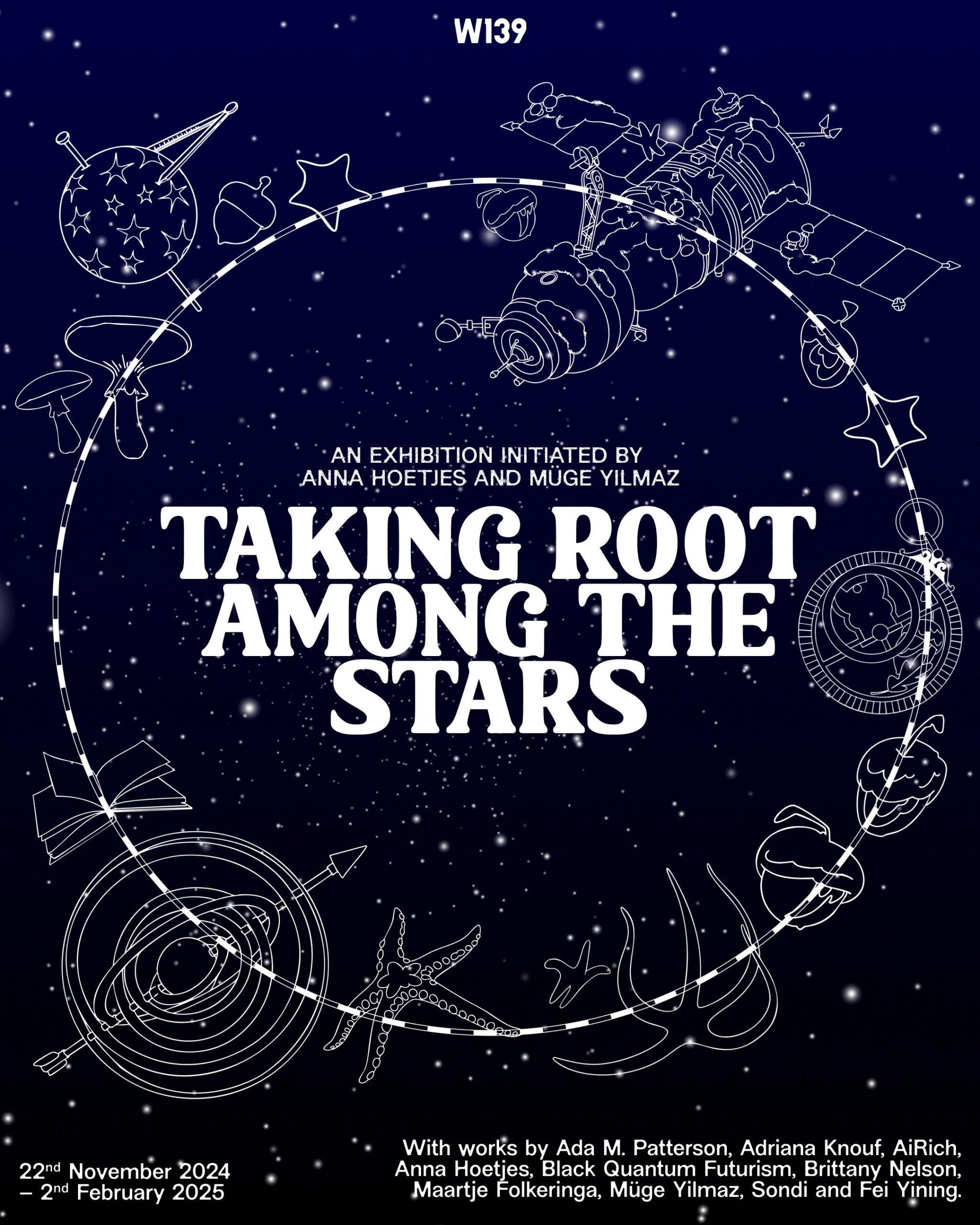
The year 2024 marks the beginning of Octavia E. Butler’s trailblazing 1993 science fiction book Parable of the Sower, from the Earthseed trilogy. In light of this important moment in time, artists Müge Yılmaz and Anna Hoetjes have initiated Taking Root Among the Stars. Emerging and expanding from the legacy of Butler’s work, this exhibition marks a year when the future became the present became the past. 

By bringing together the work of artists and writers who use science fiction not only as a theme in their work but also as a speculative worldbuilding tool to critique the society we live in, this exhibition proposes different social realities, alternative futures, and communal relations to nature. Through an interdisciplinary exploration of feminist, trans, queer, decolonial, science fiction literature, the artists in this exhibition write themselves into the future(s) they want to see.

As a platform for exchange at the intersection of art, literature, ecology, science, and activism, Taking Root Among the Stars claims speculation and its feminist possibilities by embracing what Walidah Imarisha calls ‘visionary fiction’. This form of fantastical writing helps us imagine new just worlds and affirms that marginalised groups hold the knowledge that allows them to bring into being more radically imaginative futures. Through works that are platforms of exchange in and of themselves, the exhibition holds space for processes of worldbuilding by initiating dialogue, reflection, and interaction with the audience to help us imagine a radically different future—one we look forward to, one we don’t fear.

Specifically aimed at providing a platform for feminist, queer, Black diasporic, and decolonial practitioners, each work in this exhibition is a universe in itself, holding its own community. But like an interstellar system the orbits meet, they touch, they overlap. Reaching from the depths of the oceans to the edges of space, these environments are often looked at as new territories to mine and extract from, to exploit. But as environments we know very little about, they also open up space to imagine new worlds within. The works in this exhibition move across these territories—from oceanic queerness to Afrofuturistic super beings to a speculative satellite constructed for queer, post-colonial futures. As we make our way through a feminist science fiction library, explore a collective star map, and engage in a rewriting of the protocols of time, we hope to collectively embrace what we can make instead of what we can destroy.

The community program consists of workshops, reading groups, and gatherings that make visible the possibilities of making connections with speculative literature beyond imagination and theory. Through practical workshops on survival, in both our current political climate and in the environments that we inhabit, the public program aims to build, link, and sustain communities. By gathering to read and write together, to learn new skills, to listen and be in community with one another, the public program reinforces that the speculative is grounded in gaining tools for the future.

With works by AiRich, Black Quantum Futurism, Maartje Folkeringa, Anna Hoetjes, Adriana Knouf, Brittany Nelson, Ada M. Patterson, Sondi, Müge Yilmaz and Fei Yining.

The exhibition was preceded by Gathering Earthseed, a full-day gathering about feminist science-fiction and the legacy of Octavia E. Butler on July 20th, with a panel conversation, workshops, a ritual and a collective dinner.

Learn more about the participating artists and exhibition in the handout of Taking Root Among The Stars.

This exhibition is generously supported by Gieskes-Strijbis Fund, Mondriaan Fund, Amsterdam Fund for the Arts, het Cultuurfonds, Fonds 21, The Netherland-America Foundation, Buro Stedelijk and Oedipus Brewing.

Colophon

Initiated by Müge Yılmaz and Anna Hoetjes. At W139, we work collectively and intersectionally on exhibitions—guided and led by the initiating artists that we invite.

This exhibition has been developed by the artistic team, with Margarita Osipian leading the process, together with Tomas Adolfs, André Avelãs, Dana Claasen, Phil Compernolle, Levi van Gelder, Dil Ghale, Arthur Jules, Geer van der Klugt, Izzy Lee, Macarena Magaña, Claudio Ritfeld, Tiago Sá da Costa, and Annette Wolfsberger.

Visual Identity: Sheona Turnbull

This exhibition is generously supported by: Gieskes-Strijbis Fund, Mondriaan Fund, Amsterdam Fund for the Arts, het Cultuurfonds, Fonds21, The Netherland-America Foundation, and Oedipus Brewing. Our partners: Buro Stedelijk, IMC Weekendschool, Kunsthaus Graz, SAWA Foundation and San Serriffe.

A special thank you to: Brigitte van der Sande, Rita Ouédraogo, Hana Nina Hussein, Marly Pierre-Louis, Fiep van Bodegom, and everybody who has been part of building the community and discourses around this exhibition.
Remarkable Meetings with Disgusting Men

Initiated by EMIRHAKIN, Remarkable Meetings with Disgusting Men reflects on (self-)censorship as a highly tangible experience, ████ proposing ways for maneuvering through fear. ██████ ████ █ ███, ████. In this exhibition, the strategies of oppressive regimes and their bodily implications are explored, subverted, ██████ and reappropriated through a careful spatial choreography. How does political coercion permeate the personal, infiltrate bodily boundaries, and ███████████? 

EMIRHAKIN has invited a group of artists to reconfigure the symbols and strategies associated with fear and oppression—holding space to reflect on the erasure of choice, identity, agency, ████ and life within heavily politicized structures. ████ █████ ███ ████. Taking shape through video works, archival footage, performances, ████, sound and light installations, and paintings, the exhibition navigates the manufacturing of (cultural) identity, ████ ██████, nationalism, the impact of censorship, and life under authoritarian regimes.

Informed by ███ personal experiences as a ████ ████ in ████, EMIRHAKIN’s practice ██████ and visualizes the personal, emotional, and physical consequences of (self-)censorship while simultaneously paving a pathway for vulnerability and resilience. In a recurring part of the programme, EMIRHAKIN reflects on the █████ and ████ of ███ life under suppression—delving deeper into the ideological construct of masculinity that profoundly influenced his ██████ and █████.

Witnessing the rise of the right-wing and its effect on the freedom of expression, Remarkable Meetings with Disgusting Men invites you to traverse the complexities of contemporary political realities, in the shadows of systems of ██████, manipulation, commodification, and racialization. The exhibition will be accompanied by an extensive context programme of performances, movie screenings, ████ █████ and a night of storytelling.

Participating artists: Andreas Tegnander & Ossip Blits, Batuhan Keskiner, Can Demren, EMIRHAKIN, ghenwa noiré, Jonas Lerch, Ksenia Yurkova, Mohammed Tatour and Zalán Szakács. 

Context programme with: Başak Layiç, Elif Satanaya Özbay, Ghaith Kween Qoutainy and Sipan Sezgin Tekin.

More about the participating artists you can find in the digital handout of Remarkable Meetings with Disgusting Men.

Photos by Giovanni Salice

This exhibition is generously supported by: Gieskes-Strijbis Fund, Mondriaan Fund, Creative Industries Fund NL, Stadt Wien, Amarte Fund, Goethe Instituut and Oedipus Brewing.

Colophon

Exhibition initiated by EMIRHAKIN

At W139, we work collectively and intersectionally on exhibitions—guided and led by the initiating artists that we invite. This exhibition has been developed by the artistic team, with Claudio Ritfeld leading the process, together with Tomas Adolfs, André Avelãs, Ana Brichta, Dana Claasen, Levi van Gelder, Dil Ghale, Geer van der Klugt, Macarena Magaña, Margarita Osipian, Ghaith Kween Qoutainy, and Annette Wolfsberger.

Visual Identity by EMIRHAKIN and Fadi Houmani.

This exhibition is generously supported by: Gieskes-Strijbis Fund, Mondriaan Fund, Creative Industries Fund NL, Stadt Wien, Amarte Fund, Goethe Instituut and Oedipus Brewing.