A Slow Conversation on Sustainable Practice

How can artists and designers make their own practice more sustainable for themselves? The current political and ecological climate requires urgent action. We need to move fast, before we run out of resources. But how do we navigate this landscape without burning ourselves down first? Let’s slow down for a moment, get personal, get engaged together, and move from there.    

This workshop is for students and beginning artists, designers and artistic researchers to exchange gained knowledge and ideas about what a sustainable art practice could look like – especially while taking your own needs and resources into account.

For this occasion, Urgent Ecologies (Gerrit Rietveld Academie) also invited several artists, designers, and artistic researchers to join the conversations in small groups. In between the conversations we will do body-awareness exercises by Rosalie Bak (affective, artistic researcher and haptonomic professional). 

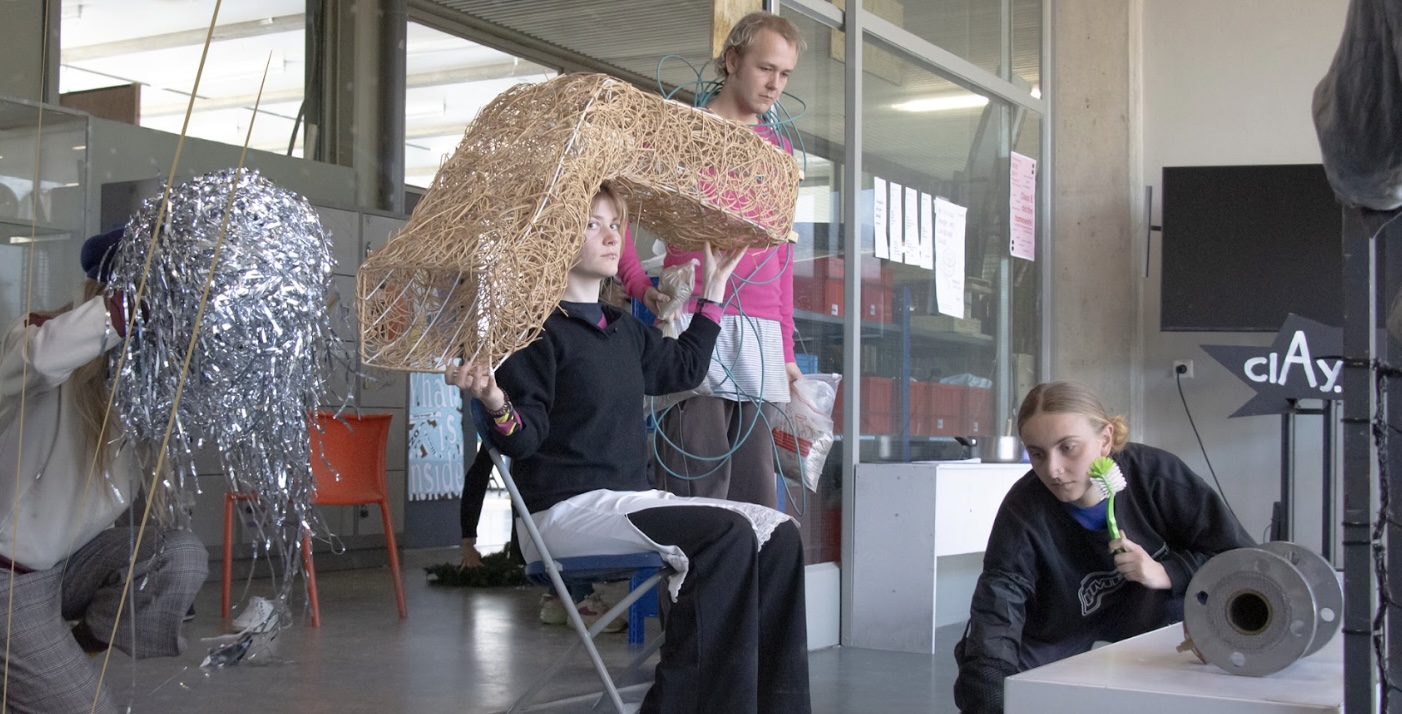
During the workshop we will move between an individual and collective perspective by means of connecting to ourselves, the space we are holding together, and our shared responsibility for the world – we are also part of. We will highlight the importance of the moment itself and create a physical, collective output made of clay that will be part of the exhibition PPP by collective Sunflower Soup at W139.

Walk-in — 13:30
Start workshop— 14:00

Do you want to participate? Reserve your spot on the Eventbrite-page of the event.
Participation is free, but donations are very welcome. There are limited spots available.

Urgent Ecologies is an initiative of the Gerrit Rietveld Academie that focuses on fostering a fundamental ecological and sustainable approach throughout all levels of the academy—within (art) education, institutional activities, and policy. It aims to integrate sustainability as both a topic of discussion and a practice embedded in the day-to-day functioning of the academy.
 Urgent Ecologies provides policy advice and initiates, supports, and highlights various projects, events, and collaborations. Some initiatives have been a pilot project to create a vegan canteen, a community garden on campus (the Garden Department), a fund to encourage the use of sustainable production methods, and a materials library.

Rosalie Bak works at the intersection of affective research, embodiment, and spatial practices, with a strong focus on ecology, art, and somatic care. As an artist and haptonomic professional she is interested in the ambiguous relationship between people and their non/living environments and explores how to make complex predicaments experiential through the body. Her multidisciplinary practice spans from the development of new methodologies and pedagogies to storytelling, writing and the design of workshops, walks and experiences, often working with communities, scientists, (artistic) research groups and the more-than-human world.

Mariana Jurado Rico is an artist and curator working with printing, installation, publishing, radio, and video performance to facilitate points of merger between people. Her works build situations with elements of humor, failure, impatience, and contradiction as tools of resistance. Currently she is working on different collaborative projects that tackle her interest in independent initiatives and self-initiated processes.

Together with Francisca Khamis Giacoman, she founded Espacio Estamos Bien (EEB),  an autonomous non-autonomous space for contradictory things to happen based in Amsterdam that organizes gatherings, publications, exhibitions, and other formats. EEB started plotting the idea of a new space in Amsterdam—not necessarily a physical one—that could provide an affective and supportive context. A space for those who do not belong in the institutional circuit. A space that is always changing, always moving, but always available. EEB is an initiator of conversations and a facilitator of situations. 

Nina van Hartkamp is a multidisciplinary artist, botanical dyer, and story weaver. She graduated from the Gerrit Rietveld Academie in 2020. Her research-based practice unfolds through socially engaged projects that explore the interconnections between humans, non-humans, and the environment.

Working with materials such as plants, microbes, second-hand textiles, audio, video, and performance, Nina’s projects grow out of intimate exchanges with people and places. Her work is guided by questions of belonging, co-existence, and planetary interdependence.

Through site-specific, immersive experiences—including public installations, collective rituals, and community workshops—she invites participants and audiences to reflect on their relationships with each other and the more-than-human world. Her work offers poetic resistance to extractive systems, individualism, capitalism, colonialism, and patriarchy. 

Harriet Rose Morley is a UK-born artist, researcher, and initiator based in the Netherlands since 2018. Her practice explores the gender and labour politics of technical skill within art, design, and architecture, focusing on the working conditions of cultural and technical practitioners. Through her ongoing research Hard Work, Soft Work, she investigates both visible technical skills and undervalued soft skills essential to collective work. A graduate of the Glasgow School of Art and a Dutch MA program, she has led material- and collaboration-based projects, taught across UK and Dutch institutions, and worked with diverse disciplines from architecture to blacksmithing. From 2023–2025, she was Co-Director of Platform BK. In 2025, she will be a Tech Fellow at the Rijksakademie and a resident at Kunsthal Gent.

Amalie ‘Sveske’ Ourø  is a Danish artist who has been living, studying and working in the Netherlands since 2018. Her work, mostly performative and site-specific, can be best described as art-anthropology and is inspired by her curiosity about humanity and reflections of the inner workings of our society. Through her work she actively engages with the audience through acts of play and subversion, inviting them to think critically about diverse societal urgencies within the field of sociology, urbanism, and ecology — encouraging meaningful and sustainable change along the way. Amalie Sveske Ourø is part of the art and garden collectives; The Garden Department (Gerrit Rietveld Academie) and Pleasure Ground.

Joakim Derlow is an artist who specialises in fragmented narratives and spatial comics. His practice brings together objects, found items, drawings and his own performative presence to tell stories of a fragmented nature. These elements thrive on their own, but are meant to be seen in a site specific arrangement which provokes the associations and perspectives of an audience. It is their mending eyes that read out trails or a sequence – inso forming the notion of a narrative.
Unpotato – Edible manifesto making workshop

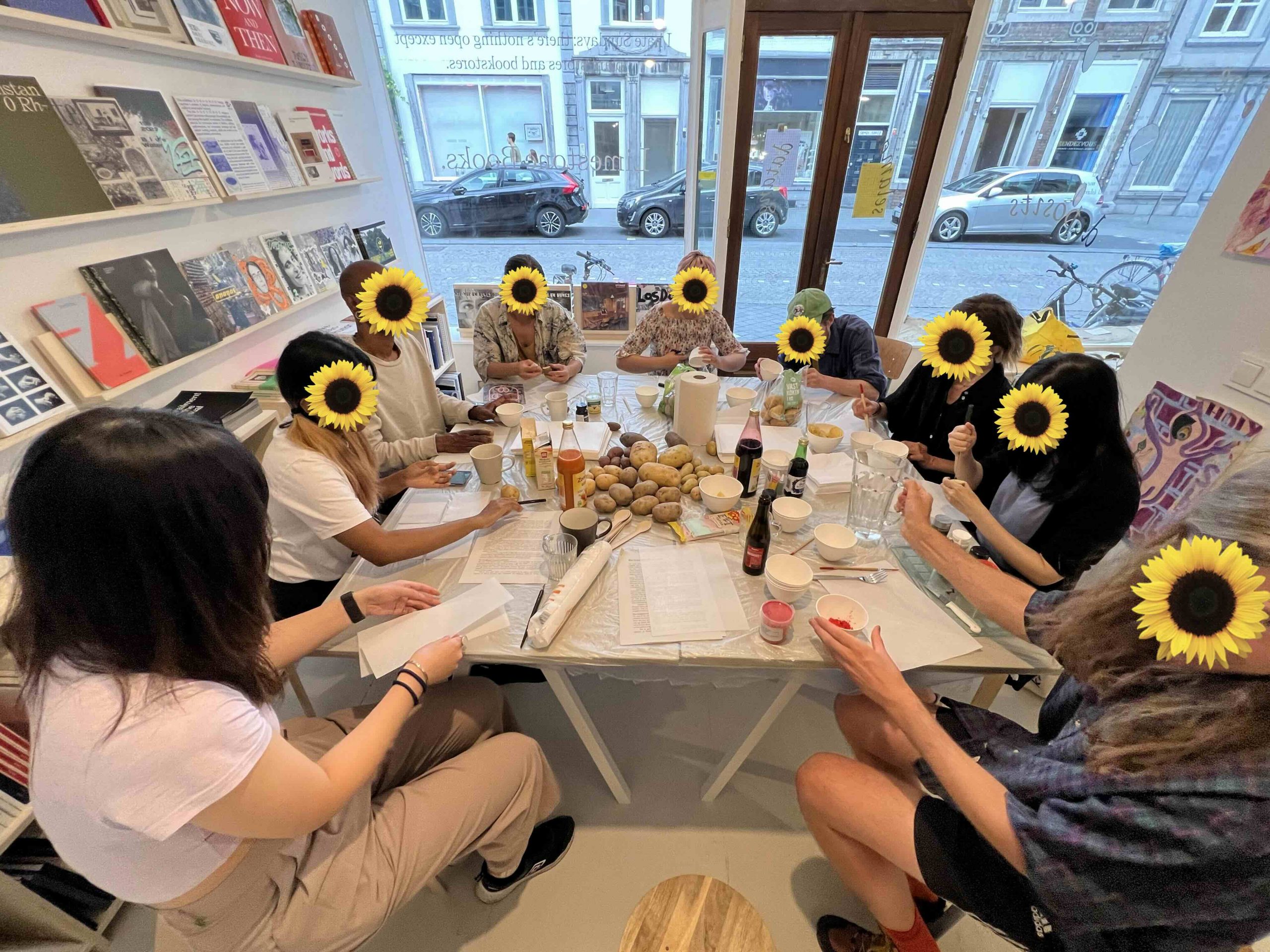
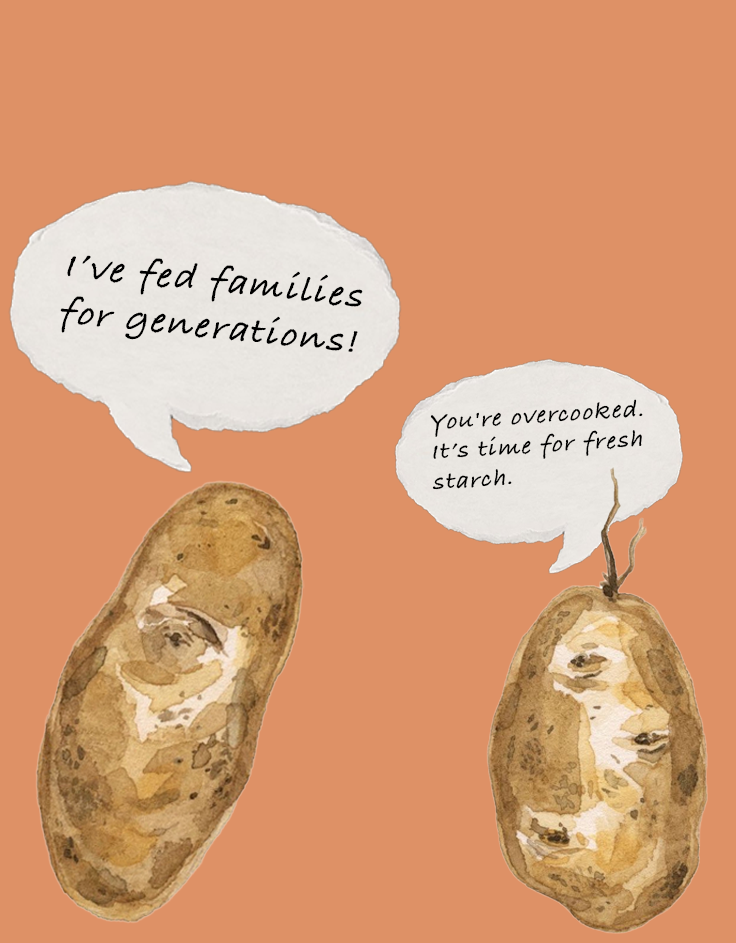
The potato is usually seen as a trivial and ubiquitous source of food; it’s just there. We don’t think too much of it, which is surprising given that there are more than 4500 varieties of potatoes known worldwide and that almost every food culture in the world uses potatoes. This ubiquity obscures how the lives of humans and potatoes have been entangled throughout history. In the kitchen of the panic factory, we’ll follow the potato on its journey through continents, soil, food, metabolism and starch by collectively preparing an edible manifesto. During this workshop we’ll write, draw, and stamp on edible paper made from potato starch. Using pigments from sweet potatoes, juices, and potato stamps, we’ll visualise how to transform populist purée politics into a pluralistic polyphonic potato tornado. Finally, we’ll throw the manifesto and the potato stamps into a soup that will be served at the end of the workshop and eaten by all participants, thus digesting the original zine.

Sunflower Soup was born out of a shared activist engagement and a need to explore what art can mean beyond the confines of the individual. The collective is driven by a number of questions: can a shared way of working contribute to a less detached experience of art? How do people relate to each other and to the more-than-human world? How do we reconcile the importance of activism with a poetic visual language that allows for humour, paradox and ambiguity?

Reserve your spot on the Eventbrite-page of the event.
Participation is free, but donations are very welcome.

The Potato Parliament: A Spud-itorial Debate

Do all potatoes have the same interests or needs? What would potatoes say in a debate? Are all potatoes created equal and privy to the same rights? This workshop explores the existence, language, and connected system of potatoes through playful embodiment and poetic political imagination. 

In the first part of the workshop, participants will be provided with a potato for whom they will form a political party. Each person will receive an information card about their potato and formulate a proposal for a new law through the eyes of their potato. The facilitator, i.e. Head Potato, will help guide each party to come up with a name, slogan, and main debate points. 

In the second half of the workshop, all of the potato parties will come together and debate whether the proposed laws should be passed in Parliament or not. All members will vote on passing or rejecting the bill. 

The debate session will be recorded and presented during the remaining days of the PPP workshop programme.

The Potato Parliament: A Spud-itorial Debate with Jody Aikman
Saturday 31 May, 12:00 – 15:30
Wednesday 18 June, 12:00 – 15:30

Jody Aikman is a poet and performer exploring the intersection where artist, audience and message meet. She researches the silences in language by questing meaning, ambiguity, and implication through her writing. Her performances are created to blur the line between audience and artist, investigating the relationship between herself, the other and the world. 

Reserve your spot on the Eventbrite-page of the event.
Participation is free, but donations are very welcome.

PotatoPress

On 29 May, PotatoPress opens the doors of its editorial room to all curious, wandering, and ambitious potato journalists to contribute to the PPPotato newspaper! Come peel a potato to reveal its hidden layers, dig deep in the earth for its roots, expose its versatility, become the paparazzi of potatoes, bring out the latest (fake) news, or contribute to the entertainment section. 

In the editorial room, we’ll explore the politics of the potato together. Using different perspectives, personal knowledge, field research, and (reliable) sources, we’ll reflect on the role of the potato in our society, the global economy, our common thinking, different ideologies and strong opinions. What does the potato have to tell us? How can the potato nurture our ideas about the politics of being together and interacting with each other? We’ll also dive deep into our primal Dutch frying culture and the snackbar as a meeting place. What is the role of the snackbar in today’s times? 

The newspaper will be published and distributed in the neighbourhood of P139.

Participants can drop in and join any time. You can sign up using the Eventbrite link.

Mul-thee-fuhngk-shuh-nl is a collective that creates dynamic installations with a crossover between workshops, public space installations, and happenings through interactions with others. Their projects share a common focus on engaging with the environment and fostering exchanges with a diverse audience, generating new imaginaries around the contexts the projects take place in.

P(r)otato Propaganda Production workshop

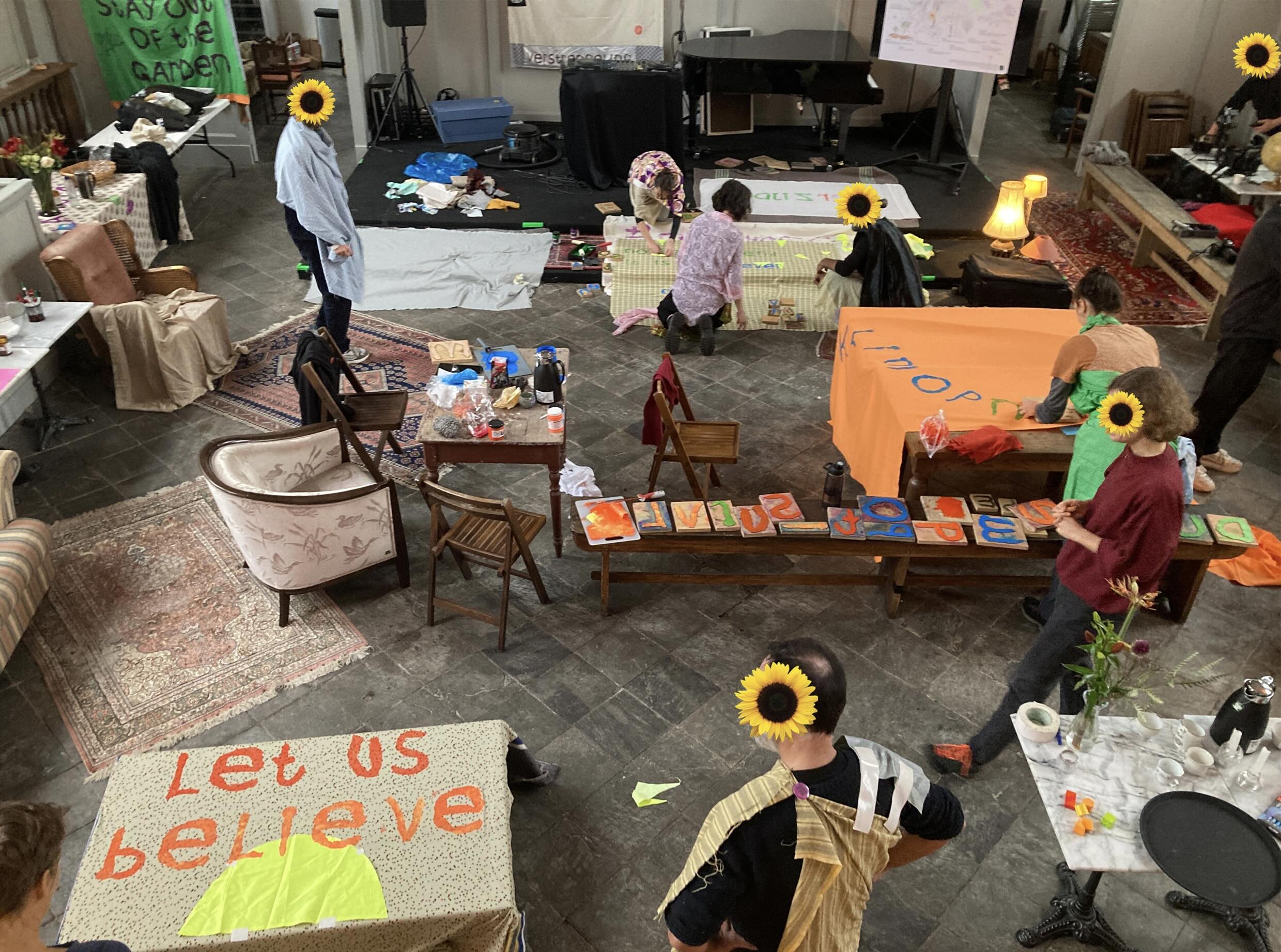
Make Playful P(r)otato Propaganda with Sunflower Soup! During this workshop, participants will engage in experimental ways of imagining politics, while creating new PPP slogans, pamphlets and monumental banners together. Using PPP’s very own Pulp-font stamps, and an amazing collection of fabrics, we will produce PPP propaganda that is poetic, colourful, and polyphonic. Let’s Peel the Power! And practise the politics of poetic potato promotion.

The workshop is open to all ages (grown up and baby potatoes) and no prior skills are required to take part. The banners produced in the first workshop will become part of the PPP and will be displayed in the space. 

P(r)otato Propaganda Production workshop with Sunflower Soup

Sunday May 25, 15:00 – 18:00
Saturday June 14, 14:00 – 17:00

Sunflower Soup was born out of a shared activist engagement and a need to explore what art can mean beyond the confines of the individual. The collective is driven by a number of questions:can a shared way of working contribute to a less detached experience of art? How do people relate to each other and to the more-than-human world? How do we reconcile the importance of activism with a poetic visual language that allows for humour, paradox and ambiguity?

Reserve your spot on the Eventbrite-page of the event.
Participation is free, but donations are very welcome.

Potato Growing Workshop

13:00 hrs at W139 or 14:00 hrs at the 4Siblings field.

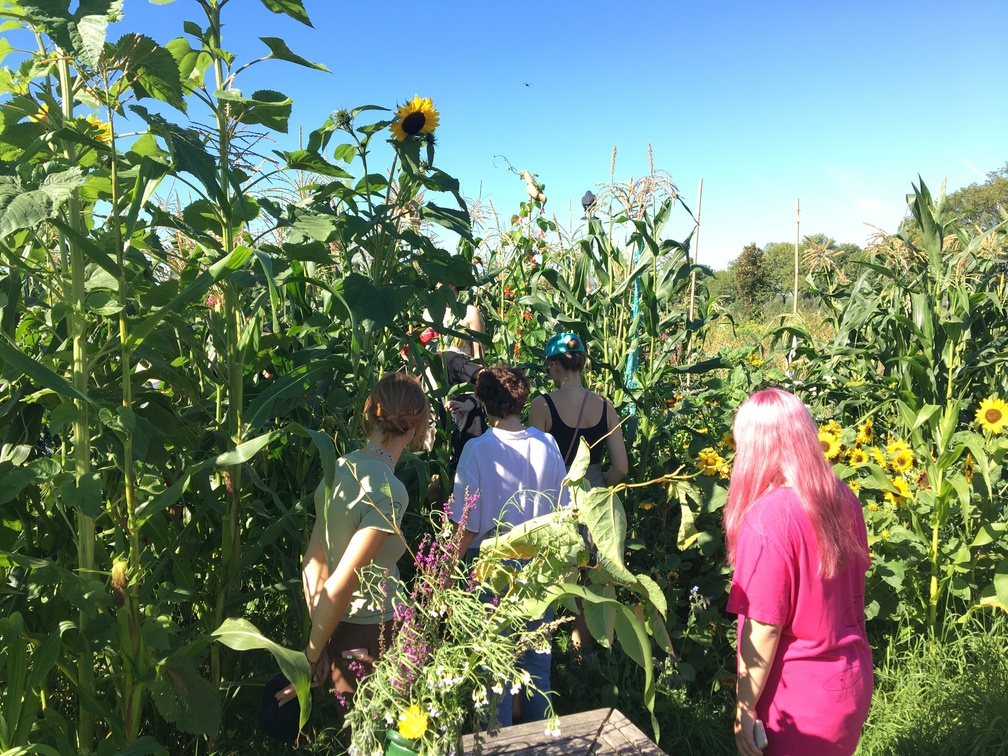
Polyculture, in opposition to monoculture, is a system of growing plants that are beneficial to each other and create a regenerative effect on the soil. We think of polyculture as a symbol of political practices of living together in community. In this workshop we will collectively learn about polyculture and the life cycle of plants—from seed to sowing, to growth, and harvest. On 13 May we will sow potatoes and think about other plants and their existence from seed to harvest, throughout the seasons. In order to facilitate this thought process on the lifecycle of plants we will engage in an embodied personification exercise with all the elements that contribute to the life of our small garden. The workshop will be outdoors, so please wear warm clothes, closed shoes and bring a bottle of water. No experience with farming or performance is needed.

Please note: if you join the workshop at 13:00 at W139, you will be participating in an approximately 30 minutes bike procession to the 4Siblings field. Please bring your bike and a bag or carrier to transport material.

A follow up workshop will be dedicated to harvesting the results. 

Date and time are still to be confirmed (depending on when the potatoes are ready to harvest.)

4Siblings is an artist collective and a community garden focusing on creating ecofeminist and queer connections to food and land. They focus on land-based art and research, collectively creating gardens as artistic platforms. These outdoor spaces allow artists and makers to develop their practice from the perspective of community and ecology. 

Reserve your spot on the Eventbrite page of the event.
Participation is free, but donations are very welcome.

Meet Rainbow Soulclub #2

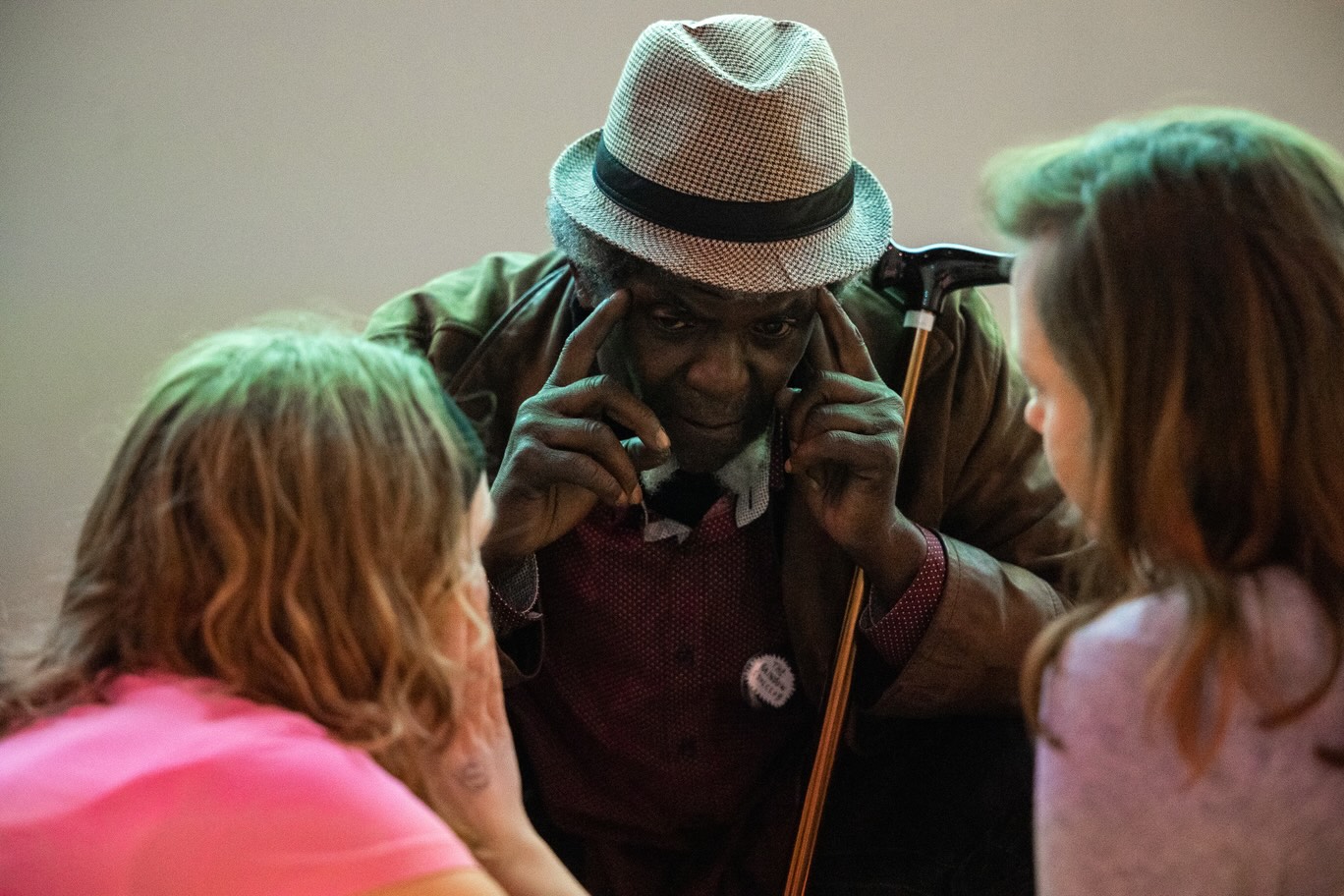
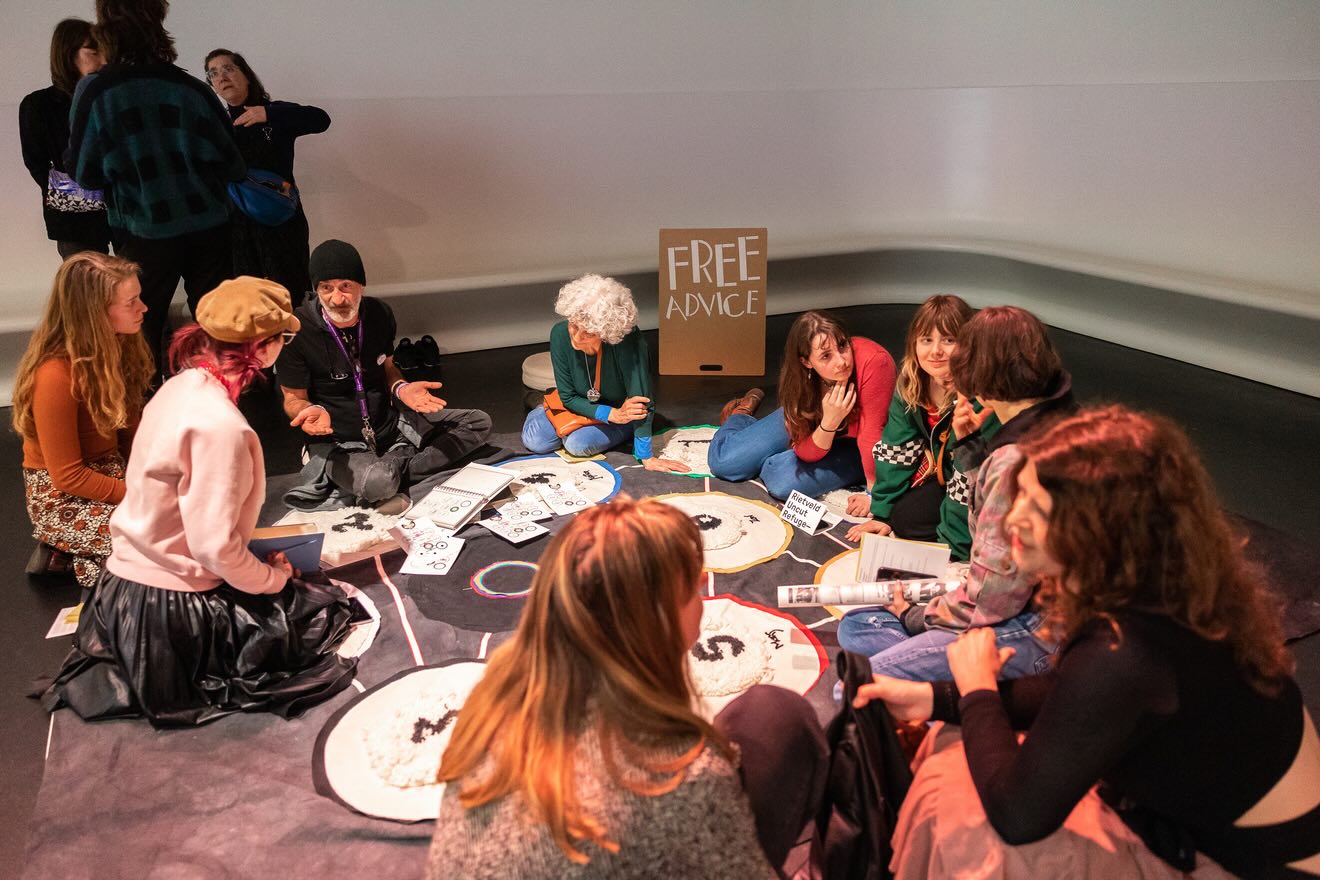
Join us on Saturday, April 12, to meet Rainbow Soulclub members during an informal afternoon featuring various activities, including live painting at the drawing table with Ebby, Abdi, and David, spiritual education in the tent with Mimosa, an informal group discussion on homelessness and housing in Amsterdam with Malika Amghar, a vegan spring roll workshop with Ting, and the classic Free Advice sessions with various Rainbow Soulclub members—get answers to all your life questions from an unexpected perspective.

Live music: Jacques (guitar and vocals)
Food: Soup by George & Perry (vegan)
Guided tour of the space – Tomas, George, Saskia

Malika Amghar has been working for more than 20 years in the social domain of Amsterdam on practical and creative solutions regarding homelessness and housing at De Regenboog Groep. Her focus is on what is possible and what does work: “I find coming up with solutions fascinating and challenging; my passion lies in removing a root cause in the system. I don’t like mopping with the tap running.

Picture by Maarten Nauw / Stedelijk Museum Amsterdam.

Meet Rainbow Soulclub #1

Join us on Saturday, March 22, for an informal afternoon with the Rainbow Soulclub, where you can meet members and take part in a variety of activities. Enjoy live painting at the drawing table with Ebby, Abdi, and David, explore spiritual education in the tent with Mimosa, and join an open discussion with human rights lawyer Eva Bezem. Take part in a vegan spring roll workshop with Ting and experience the classic Free Advice sessions with Rainbow Soulclub members, where you can get answers to life’s big and small questions from a fresh perspective.

Eva Bezem has been a human rights lawyer for many years, specializing in migration law. She is particularly committed to advocating for the legal status of Surinamese former Dutch nationals. In 2024, Eva submitted a residence permit application for 100 ‘former Dutch Surinamese’ individuals.

Picture by Maarten Nauw / Stedelijk Museum Amsterdam.

Tales Between Threads and Stars

The stars tell us stories, and with them, we can traverse time and space. Through them, we understand that the depth of the universe is infinite. Throughout human history, they have helped us explore the world, narrate mythologies, understand the seasons, and dream of new imaginaries. Recognizing where we come from is a step forward in understanding who we are in the cosmic cycle.

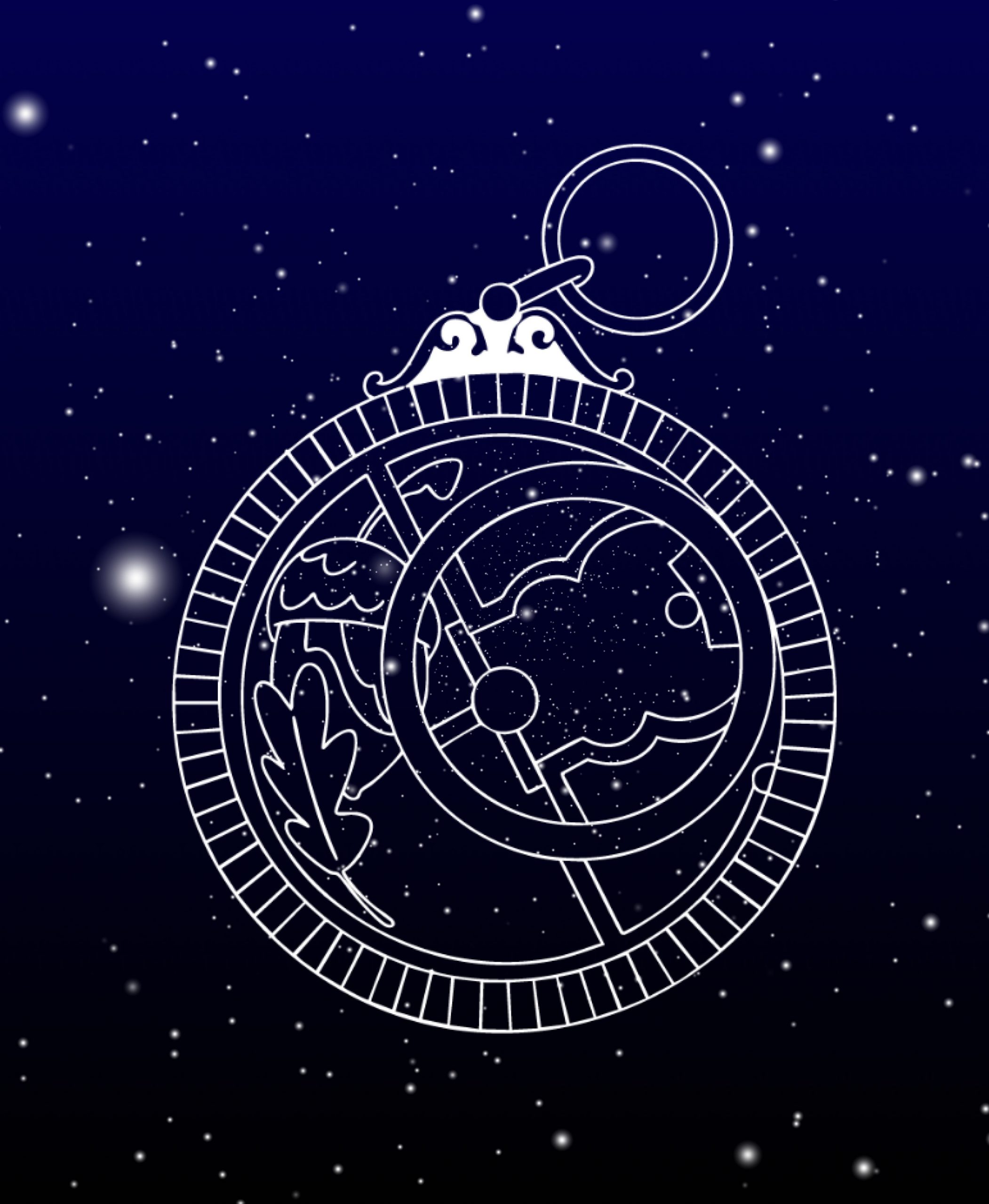
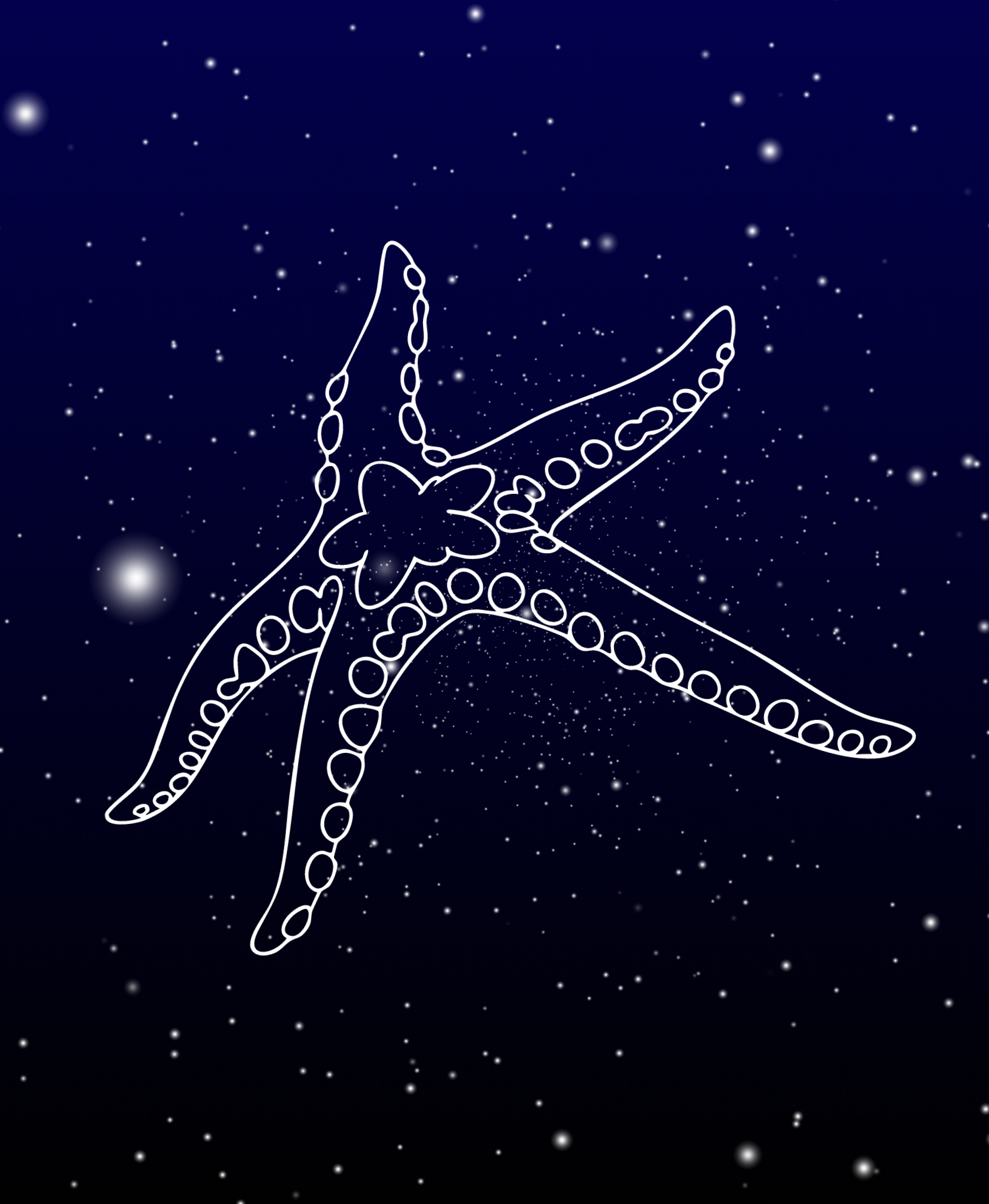
During this workshop, led by the Warmi Küyen Collective and hosted by Anna Hoetjes, we want to create a deep and creative dialogue between our understanding of the stars and the textile practice of embroidery. Through embroidery guidance from Warmi Küyen participants will explore the role and influence that stars play in our understanding of our surroundings and in our understanding of deep timescales. Reflecting collectively on basic knowledge of astronomy, both from the Northern and Southern hemispheres, we want to connect wisdom, reflecting on Greco-Roman myths and Andean cosmovisions. The invitation is to discover how cultures have used and still use the knowledge and movement of the stars to understand and transform their daily lives, using them for navigation, agriculture and cultural traditions, among others. As well as the impact it has today, in the understanding of our society, science and our own connection to the fabric of life.

In this workshop we will create a collective work called “Celestial Planisphere”, in which participants will work with the embroidery technique to create a map of the sky. On this collective canvas, participants will embroider the constellations, visible during the Summer Solstice, both in the Southern and Northern hemispheres, as well as symbols and patterns that they personally connect to the stars. The date of Summer Solstice is inspirational as it marks the beginning of a new cycle for many cultures as well as marking the beginning of a new planetary cycle from an astronomical perspective. By working on this canvas, participants will learn the basic stitches necessary to embroider this textile piece, as well as some basic knowledge about astronomy, the dimensions of the different stars, their position in the sky, the ancestral and mythological history behind them, and how to use a celestial planisphere in real life.

Capacity: 20 people maximum
Ticket: €10,00
Student ticket: €7,50

Buy your ticket here.

Warmi Küyen is a collective of Latin American women artists and cultural managers, based in Amsterdam, NL. The collective arises from their need to express their feelings and vision through the textile arts, promoting and spreading the Andean Textile culture.

if you’re on time, you’re late

if you’re on time, you’re late is a three-part workshop series by Taylor Le Melle for writers of speculative fiction, science fantasy, and magical realism. During this series of three workshops we will experiment with timed automatic writing in response to a question or prompt. We will drink tea and discuss what it takes to show up at the desk or wherever you write, and at the end of this workshop you can leave with additional structures to support your creative work. 

The thing is, inspiration is ecstatic, sure, and craft is honed through experience, yes, but in addition to those talents, Octavia E. Butler also had a plan, Ursula K. Le Guin also had a daily routine. How do we reconcile the rote work of being available to write with our urgent work of dismantling one of England’s violent inventions: standardised time? And while writing is not only a cognitive exercise, it does, at a very basic level, entail the firing of electricity from our guts to our brains and then on to other parts of us via the nervous system. First stop after the brain is the heart, by the way. So, the question is, how can we create more heart for our writing by what we feed the gut?

We will be feeding the gut during the workshop because food, or minerals, or our parting gift from the earth, is what carries information to every cell in our bodies, or our DNA, or our gift from our people that came before us in time. Automatic writing is a way of translating that information that the minerals carry.

19 January — 14:30 – 17:30 
26 January — 14:30 – 16:30
2 February — 14:30 – 16:30

Capacity: 10 people maximum
Tickets: €30,00
Studentticket: €20,00

Buy your ticket here.

* Snacks and drinks will be provided during the workshop. Please let us know if you are attending and have any food allergies.

Taylor Le Melle is based in Amsterdam and is a writer. Taylor’s work has been published in the anthology Carrier Bag Fiction by Spectre Books, and as an editor published Orion J. Facey’s cult science fantasy classic The Virosexuals.