kiln as kin: a day of gathering, firing, cooking

“What flavors place, what place flavors?” Posed by Christina Sharpe in her book Ordinary Notes, this question lingers in the space between land and taste. How does place, how does land, persist even when territory fractures? What stories, histories, and rituals do we carry with us through food? Ingredients, gestures, and tastes become a living archive carried within and through our daily practices of making—kneading, fermenting, grinding, storing, carrying.

Using food as a way to hold and transmit knowledge, during this day of gathering we will come together to activate a newly created tonir-style clay oven and a small stove at Four Siblings. The oven was built during an earlier workshop in May with transdisciplinary artist Tatiana M. Mélo. We will prepare food, cook, and eat together as a way to share knowledge about food systems, forgotten recipes, and lost rituals. We will be joined by Martina Manterola and Carmen Serra, cofounders of colectivo amasijo, an intergenerational feminist collective who work across art, cooking, and land-based pedagogy. They will join us in activating the ovens through their own rituals, practices, and foods. Together with Tatiana we will also be creating small clay structures and sculptures to bake bread inside of.

The residency of colectivo amasijo is part of the Exchanges programme by the Prince Claus Fund, with the support of the Amsterdam City Council.

Ticket: €10
Student and solidarity ticket: €7,50

Buy your tickets at via Eventbrite

Location: Four Siblings, President Allendelaan 1, 1064 GW Amsterdam

colectivo amasijo is a feminist collective composed of women from various disciplines and generations, working across art, cooking, and land-based pedagogy. amasijo’s approach centers on collaborative cooking and agriculture as forms of resistance and land regeneration. They are united in their desire to actively reflect on the origin and diversity of our food. Since their formation in 2019 they have been providing a platform for non–dominant voices: the narratives of women close to the land, stories that tell us the real cost of climate change and show us the way towards the regeneration of the land. Through their projects, that can take the form of gatherings, dinners, research, actions, ceremonies, exhibitions, markets, seminars, film, or talks, the collective builds the needed structures to form a community in which taking care of ourselves and taking care of the territory we inhabit is priority. Their practice insists on care, circular knowledge, and embodied time — challenging extractive logics through feminist, decolonial methodologies.

Instagram colectivo amasijo

Tatiana M. Melo is a transdisciplinary artist from Barcelona, living in the countryside of La Garrotxa. She works with clay and ceramics—activating the memory of territory through ritual objects made with stones, ashes, and words gathered from the community. Her practice centers on the transformation of soil into kilns, understood not only as firing tools, but as spaces of encounter, transformation, and ritual. She explores clay as an ancestral material, applying sustainable practices to construction and everyday objects. She has organized workshops and gatherings on collective building, ceramics, and community, collaborating with artists and researchers to rethink the relationship between humans, materials, and the environment.

Instagram Tatiana M. Melo

Four Siblings is a land based art and research project. They come together to create an edible labyrinth in the shape of an artwork in the threshold of the city of Amsterdam. They want to create a sense of belonging to the earth we live on, to the food we eat. They investigate collective ways of generating knowledge and make it as open source as possible.They want to do so in a mutually supportive way—care for our bodies while we care for the land, bring back biodiversity and seed resources, generate new local networks between artists, farmers, permaculturists, and residents, while learning by doing.

Website Four Siblings

kiln as kin: clay oven building workshop

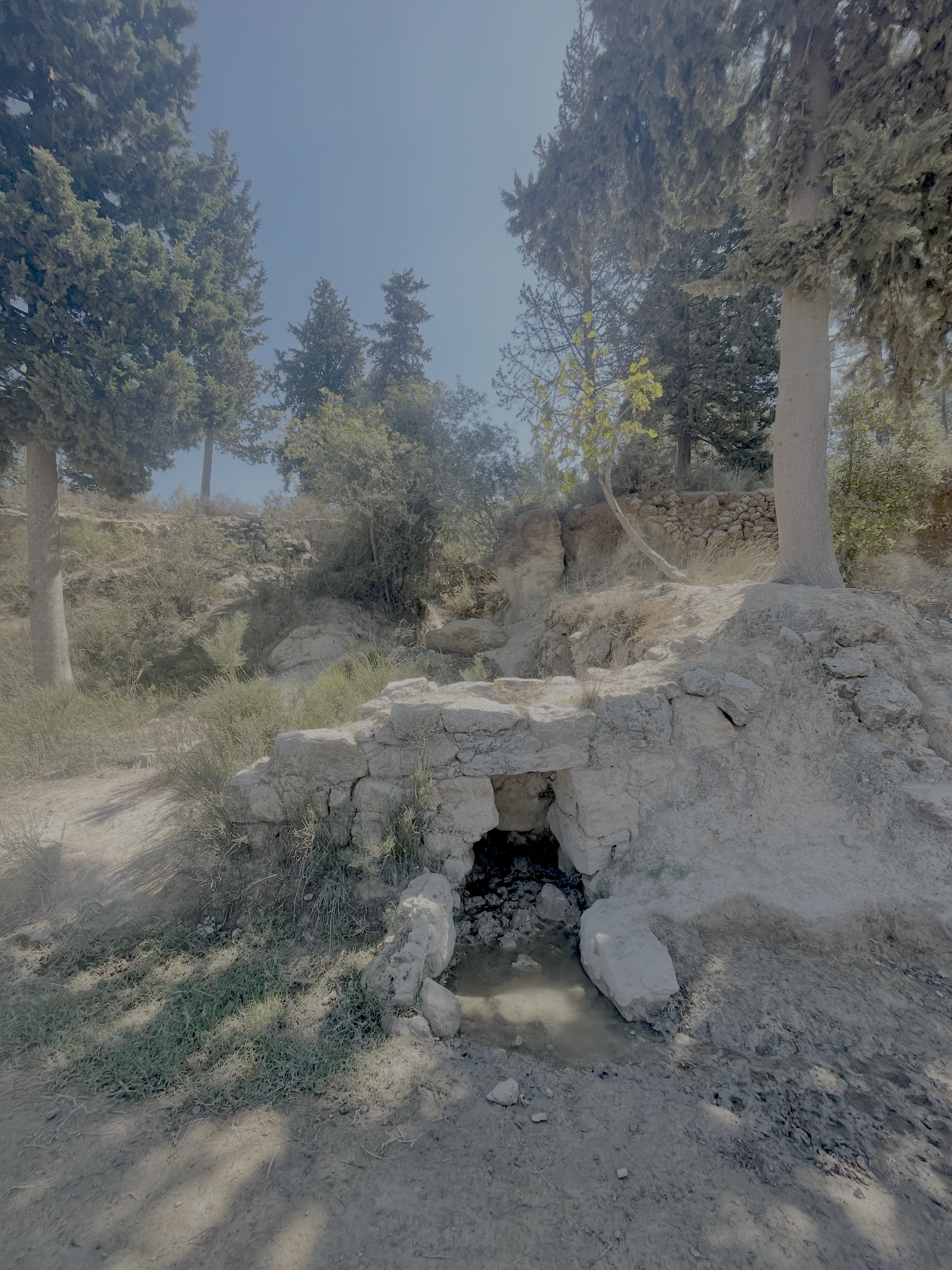
tandoor, tannour, tandir, tonir—an ancient underground clay oven. Carrying different names, the tonir belongs to a family of ovens that are found across Central and South Asia and the MENA regions. The oven has always been a central gathering point. In Armenian cultural tradition it was seen as a symbol of the ‘sun in the ground’—existing as a sacred space in the home for baking bread, cooking, and performing rituals. 

During this workshop we will build a tonir-style clay oven together in the ground at Four Siblings, using clay, soil, and sand from their land. Soil is one of the most abundant materials on earth, yet it remains one of the most overlooked. It is an extraordinary material to build with: it breathes, holds thermal inertia, and connects us directly to the land we inhabit. For thousands of years, our ancestors have worked with soil in many ways: growing food, shaping ceramics, building ovens and kitchens to cook with fire, and constructing homes. In many modern societies, however, soil is often treated as waste. How did we end up living so disconnected from such an abundant material?

We will be guided by ceramist, builder, artisan, teacher, and researcher Tatiana M. Melo. In Tatiana’s practice she transforms soil into kilns, seeing them not only as firing tools but as spaces of encounter, transformation, and ritual. For Tatiana, building with earth is also a gesture of remembrance and care: a way of honoring the knowledge of our ancestors and the land we live on. Gathering around fire becomes a space not only for transforming food, but also for reflecting on the narratives that shape how we live and where we are going

In this day-long workshop, we will learn how to understand soil and use it for different purposes as we learn by doing collectively. We will start with a theoretical explanation about soil, earthen plasters, and wood-fired ovens, followed by the collective building of the tonir-style clay oven. Alongside the larger oven, we will also build a small stove.

These kilns will be activated on June 13th, during kiln as kin: a day of gathering, firing, cooking, where we will prepare food, cook, and eat together as a way to share knowledge about food systems, forgotten recipes, and lost rituals.

We will be working outside, so please dress appropriately for the weather. 

Lunch will be provided. There are only 15 spots available!

Ticket: €30
Student and solidarity ticket: €20

Buy your tickets at via Eventbrite.

Location: Four Siblings, President Allendelaan 1, 1064 GW Amsterdam

Tatiana M. Melo is a transdisciplinary artist from Barcelona, living in the countryside of La Garrotxa. She works with clay and ceramics—activating the memory of territory through ritual objects made with stones, ashes, and words gathered from the community. Her practice centers on the transformation of soil into kilns, understood not only as firing tools, but as spaces of encounter, transformation, and ritual. She explores clay as an ancestral material, applying sustainable practices to construction and everyday objects. She has organized workshops and gatherings on collective building, ceramics, and community, collaborating with artists and researchers to rethink the relationship between humans, materials, and the environment.

Instagram Tatiana M. Melo

Four Siblings is a land based art and research project. They come together to create an edible labyrinth in the shape of an artwork in the threshold of the city of Amsterdam. They want to create a sense of belonging to the earth we live on, to the food we eat. They investigate collective ways of generating knowledge and make it as open source as possible. They want to do so in a mutually supportive way—care for our bodies while we care for the land, bring back biodiversity and seed resources, generate new local networks between artists, farmers, permaculturists, and residents, while learning by doing.

Website Four Siblings

Looking back at: Wie We Welzijn

Join us for a festive recap of Wie We Welzijn!

The collective mul-thee-fuhngk-shuh-nl will present three newspapers they initiated over the past months. They will share insights into the making of the publications, and together we will celebrate the conclusion of the project with snacks and drinks.

During the Warmoes Biennale, invited by W139, mul-thee-fuhngk-shuh-nl engaged in conversations about well-being with waiting customers and people passing by. What is the state of well-being in Amsterdam’s city center, and what factors shape it? Stories, perspectives, and ideas were collected and compiled into a series of three free newspapers. These were distributed throughout the neighborhood and can be picked up by visitors at all biennale locations.

The first newspaper, about attachment, was compiled on March 7 at gift shop and parcel point Effeness. The second edition, about desire, followed on March 20 at tattoo shop ORDER. The final edition, about searching, was produced on April 4 at Happy Inn Laundromat.

mul-thee-fuhngk-shuh-nl is a fluid collective that explores its surroundings through collaborative making processes and publishes this multiplicity of voices in public space. The composition of the collective changes with each project, depending on who participates.

Warmoes Biënnale: tattooshop x verlangen

During the Warmoes Biënnale, mul-thee-fuhngk-shuh-nl will talk to waiting customers and passers-by about well-being. Stories, perspectives, and ideas on this topic will be collected during three pop-up editorial offices at the Effeness parcel point, Happy Inn Laundromat, and ORDER tattoo shop. At each location, they will address a different subtopic of well-being: pakketpunt x hechten, tattooshop x verlangen & wasserette x zoektocht. The findings will be published in three publications, which will be available in the participating pavilions of the Warmoes Biennale.

tattooshop x verlangen

The second editorial office of mul-thee-fuhngk-shuh-nl is setting up shop for a day at ORDER tattoo shop: a place where people sit for long periods of time or wait for their turn. This is a good moment to discuss what gives life meaning in a post-capitalist system. We collect definitions of meaning, investigate whether people consider themselves meaningful, and where the desire for meaning comes from. We collect stories, thoughts, wishes, the feeling of meaning in Warmoesstraat, tips and tricks for meaning, classified ads, and historical context about the welfare economy.

Mul-thee-fuhngk-shuh-nl is a collective that creates dynamic installations with a crossover between workshops, public space installations, and happenings through interactions with others. Their projects share a common focus on engaging with the environment and fostering exchanges with a diverse audience, generating new imaginaries around the contexts the projects take place in.

Warmoes Biënnale: pakketpunt x hechten

During the Warmoes Biënnale, mul-thee-fuhngk-shuh-nl will talk to waiting customers and passers-by about well-being. Stories, perspectives, and ideas on this topic will be collected during three pop-up editorial offices at the Effeness parcel point, Happy Inn Laundromat, and ORDER tattoo shop. At each location, they will address a different subtopic of well-being: pakketpunt x hechten, tattooshop x verlangen & wasserette x zoektocht. The findings will be published in three publications, which will be available in the participating pavilions of the Warmoes Biennale.

pakketpunt x hechten

The first editorial office for the three publications of Wie we welzijn is located at parcel point Giftshop Effeness. Here, mul-thee-fuhngk-shuh-nl will discuss materialistic satisfaction in relation to Warmoesstraat as a centuries-old center for trade. While you wait for your parcel, there is just enough time for self-reflection, an existential crisis, or a mental breakdown. What did I order again?

In addition to collecting the contents of packages, we ask questions such as: do you have what you want? Where does this desire for more come from? How do we position ourselves in a world that revolves around accumulating wealth and possessions? How do your possessions possess you? We collect reviews, stories, (un)realistic classified ads for (more) stuff, the best object you can own.

Mul-thee-fuhngk-shuh-nl is a collective that creates dynamic installations with a crossover between workshops, public space installations, and happenings through interactions with others. Their projects share a common focus on engaging with the environment and fostering exchanges with a diverse audience, generating new imaginaries around the contexts the projects take place in.

Warmoes Biënnale: wasserette x zoektocht

During the Warmoes Biënnale, mul-thee-fuhngk-shuh-nl will talk to waiting customers and passers-by about well-being. Stories, perspectives, and ideas on this topic will be collected during three pop-up editorial offices at the Effeness parcel point, Happy Inn Laundromat, and ORDER tattoo shop. At each location, they will address a different subtopic of well-being: pakketpunt x hechten, tattooshop x verlangen & wasserette x zoektocht. The findings will be published in three publications, which will be available in the participating pavilions of the Warmoes Biennale.

wasserette x zoektocht

On April 4, mul-thee-fuhngk-shuh-nl will arrive at Laundromat Happy Inn, where the third editorial office will be located. Here, they will be discussing community. How do people relate to each other? What does it mean to belong to a community? And how do you find one? What is a community, anyway? Do you ever run errands for your neighbor, or do you secretly not know who she is? Can we read the future of community in the Warmoesstraat in the clean laundry? What has your dirty laundry been through? We collect utopias, reviews about neighbors, advertisements from entrepreneurs promoting their contribution to the community, and classified ads for social contacts.

Mul-thee-fuhngk-shuh-nl is a collective that creates dynamic installations with a crossover between workshops, public space installations, and happenings through interactions with others. Their projects share a common focus on engaging with the environment and fostering exchanges with a diverse audience, generating new imaginaries around the contexts the projects take place in.

Warmoes Biënnale: Wie we welzijn

During the Warmoes Biënnale, mul-thee-fuhngk-shuh-nl will talk to waiting customers and passers-by about well-being. Where does this issue stand in Amsterdam’s city center? What factors influence it? Stories, perspectives, and ideas on this topic will be collected during three pop-up editorial offices at the Effeness parcel point, Happy Inn Laundromat, and ORDER tattoo shop. At each location, they will address a different subtopic of well-being: parcel point x attachment, tattoo shop x desire, and laundromat x search. The findings will be published in three publications, which will be available in the participating pavilions of the Warmoes Biennale.

In the editorial office and in the publications, we will explore how we can look at our surroundings differently while waiting. The Warmoesstraat and its surroundings are a playground for imagining new ways of being and other uses for space beyond the functional. The editorial offices and publications are places where we look at things differently, question our surroundings, search for something that is not there, and create our own imaginings.

Mul-thee-fuhngk-shuh-nl is a collective that creates dynamic installations with a crossover between workshops, public space installations, and happenings through interactions with others. Their projects share a common focus on engaging with the environment and fostering exchanges with a diverse audience, generating new imaginaries around the contexts the projects take place in.

About the Warmoes Biënnale

For two months, artists, entrepreneurs, cultural institutions, and residents join forces to reveal the pulse of this neighbourhood. With art ranging from intimate to monumental—often in surprising locations—alongside events and genuine local hospitality, the festival offers a new perspective on this contested, yet deeply loved part of the city.

For more information, visit the website of the Warmoes Biënnale.

Melted for Love — Locating Lost Voices

Join us for an evening that moves between research, sonic fiction, and the act of listening as resistance. The programme begins with an artist talk with Emiddio Vasquez of Lower Levant Company, and Diana Policarpo, who will introduce the research behind Bugio Radio Station, focusing on echolocation and other techniques for tracing non-human sound. Together, they discuss how listening can reveal the impact of militarisation and colonial infrastructure on surrounding ecosystems.

The night continues with Every Day Things Disappear by Urok Shirhan, a live performance unfolding as a sonic fiction from the occupied land of ‘ABC’, where words, colours, feelings – and eventually futures – are systematically erased. Told through a fragmented first-person narrator, the work slips between satire and sorrow, tracing the quiet violence of censorship. Blending spoken word with archival murmurs and encrypted song fragments, it conjures a world where remembering becomes a subversive act. Every Day Things Disappear is both lament and code, auto-myth and resistance ritual. It asks how we listen when speech dissolves and what songs take shape in silence. 

This programme is part of the Biennial exhibition Melted for Love at W139, where Lower Levant Company’s and Diana Policarpo’s works are on display. 

Programme
Wednesday 25 February
18:00-20:00

Auction Dead Darlings XX

Dead Darlings is thrilled to mark their 20th anniversary with a special exhibition and auction in collaboration with W139.

Come celebrate an auction event like no other! Two rounds of bidding, with food, drinks, performances, and plenty of surprises. Stay for the whole thing — or drop in whenever you like!

All sales are anonymous — artists’ names are revealed only after each work is sold! Our 20th edition celebrates community, creativity, and collaboration.

Sign up here for the auction!

Programme
Doors — 12:00
Auction (part 1) — 16:00–18:00
Dinner break  — 18:00-19:00
Auction (part 2) — 19:00–21:00

You are welcome to come and view the works from 12:00-16:00, and the auction will start at 16:00 hrs.
You can get a head start on checking out the artworks through the online catalogue on the Dead Darlings website

Free entrance
Register for a paddle: € 2
If you have bought a catalogue, you will receive a paddle for free, but we recommend you sign up ahead of time to make the process smoother. And don’t forget to bring the catalogue with you!

Freshly cooked food will be available throughout the evening by Aslı Hatipoğlu, with a dinner break from 18:00-19:00. Expect fresh rice paper rolls, black bao buns, and pumpkin coconut soup.

84 Participating artists in alphabetical order: Ad de Jong, Adriana Joëlle Jochems, Ahmad Mallah, Andrea Imwiehe, André van Bergen, Anika Schwarzlose & Elena Khurtova, Anna Hoetjes, Annaleen Louwes, Anne Wölk, Anni Ruffin, Antoinette Nausikaä, Anuschka Blommers / Niels Schumm, Aurélien Lepetit, Barbara Rink, Charlott Markus, Coralie Vogelaar, Danielle Vorthuys, Dasha Afanaseva, Delta van Melle, Diana Al-Halabi, Emmanuelle Wilhelm, Erik Alkema, Eva Schippers, Floor Meijers, George Korsmit, Gijs Assmann, Giorgos Gripeos, Hanna Mattes, Ine Lamers, Jacopo Calonaci, James Beckett, Jan Timmers, Janneke Raaphorst, Jean-Philippe Paumier, Jessie Yingying Gong, Joep Neefjes/LPI, Johannes Schwartz, Joseph Miceli, Kai Reichert, Kandido Filgueiras, Klara Hobza, Kristine Hymøller, Leyla Sünnenwold, Lieve Hakkers, Lina Ozerkina, Lisa Sudhibhasilp, Lo Yuen Ming, Lotte Reimann, Lotte van Geijn, Manshee Zheng, Marek van de Watering, Mariana Oliveira, Marianne Vierø, Marie Ilse Bourlanges, Marlies Neugebauer, Masaki Komoto, Maud van der Werf, Max van Meeuwen, Mayra Sérgio, Miklos Gaál, Noam Holdengreber, Pantelis Makkas, Paulien Barbas, Peter de Boer, Popel Coumou, Rebecca Sakoun & Florian Göttke, Rob van der Nol, Roman Tkachenko, Ruth van Beek, Semâ Bekirović & Xu XueQin, Seán O’Riordan, Simon Marsiglia, Sofija Li Virta, Soji Shimizu, Sophie Schreurs, Stéphanie Baechler, Susan Kooi, Susanna Brenner, T Y Gutter, Tania Theodorou, Thomas Monses, Vita Buivid and Anna Buyvid, Yann Vissers, Yiannis Vellis.

Dead Darlings began in 2005 as a subversive, anonymous art auction in Amsterdam. It has since grown into an international platform with a mission to explore the often fraught, always complex relationship between the price and the value of an artwork, focusing on dead darlings—works an artist has created but never brought to light. Inspired by “kill your darlings,” they ask: what becomes of these ambivalent works.

Aslı Hatipoğlu (TH/TR) is an interdisciplinary artist whose social practice focuses on curating participatory dinners and installations that shed light on how culinary history and agricultural politics are changing our relationship to food. From working with micro-scale bacteria and yeasts responsible for fermentation to insects such as the domesticated silkworm, Asli critically investigates ways of relating to our environment and ourselves. Currently she has been working with the shifting narrative of an artist and a tour-guide, merging fiction and reality with story-telling in performative acts as a way to critically question today’s systems of production as a marketable tourist destination.

Photos by Kyle Tryhorn

Opening Dead Darlings XX — In It Together

Dead Darlings is thrilled to mark their 20th anniversary with a special exhibition and auction in collaboration with W139. You are invited to join us in celebrating this milestone with the grand opening of Dead Darlings XX — In It Together!

Dead Darlings XX — In It Together is a two-week exhibition, including over eighty artworks, happenings, a plethora of archival materials and an extended auction event. We can’t wait to share with you what has been twenty years of fun, surprises, commitment, creativity and hard work. 

Join us for drinks, a special cocktail, and a relaxed preview of the works. Come explore 80+ artworks and archival treasures from two decades of Dead Darlings. Sign up for the auction, buy your catalogue, check out our amazing new merch, and rub shoulders with Darlings!

Programme
Opening Dead Darlings XX — In It Together
— Friday 28 November 2025

The Auction
— Saturday 13 December 2025

84 Participating artists in alphabetical order: Ad de Jong, Adriana Joëlle Jochems, Ahmad Mallah, Andrea Imwiehe, André van Bergen, Anika Schwarzlose & Elena Khurtova, Anna Hoetjes, Annaleen Louwes, Anne Wölk, Anni Ruffin, Antoinette Nausikaä, Anuschka Blommers / Niels Schumm, Aurélien Lepetit, Barbara Rink, Charlott Markus, Coralie Vogelaar, Danielle Vorthuys, Dasha Afanaseva, Delta van Melle, Diana Al-Halabi, Emmanuelle Wilhelm, Erik Alkema, Eva Schippers, Floor Meijers, George Korsmit, Gijs Assmann, Giorgos Gripeos, Hanna Mattes, Ine Lamers, Jacopo Calonaci, James Beckett, Jan Timmers, Janneke Raaphorst, Jean-Philippe Paumier, Jessie Yingying Gong, Joep Neefjes/LPI, Johannes Schwartz, Joseph Miceli, Kai Reichert, Kandido Filgueiras, Klara Hobza, Kristine Hymøller, Leyla Sünnenwold, Lieve Hakkers, Lina Ozerkina, Lisa Sudhibhasilp, Lo Yuen Ming, Lotte Reimann, Lotte van Geijn, Manshee Zheng, Marek van de Watering, Mariana Oliveira, Marianne Vierø, Marie Ilse Bourlanges, Marlies Neugebauer, Masaki Komoto, Maud van der Werf, Max van Meeuwen, Mayra Sérgio, Miklos Gaál, Noam Holdengreber, Pantelis Makkas, Paulien Barbas, Peter de Boer, Popel Coumou, Rebecca Sakoun & Florian Göttke, Rob van der Nol, Roman Tkachenko, Ruth van Beek, Semâ Bekirović & Xu XueQin, Seán O’Riordan, Simon Marsiglia, Sofija Li Virta, Soji Shimizu, Sophie Schreurs, Stéphanie Baechler, Susan Kooi, Susanna Brenner, T Y Gutter, Tania Theodorou, Thomas Monses, Vita Buivid and Anna Buyvid, Yann Vissers, Yiannis Vellis.

Dead Darlings began in 2005 as a subversive, anonymous art auction in Amsterdam. It has since grown into an international platform with a mission to explore the often fraught, always complex relationship between the price and the value of an artwork, focusing on dead darlings—works an artist has created but never brought to light. Inspired by “kill your darlings,” they ask: what becomes of these ambivalent works.

Photos by Gergely László Ofner